Landed cost modelling
A real cost per unit including freight, duty, VAT, clearance and delivery, so suppliers in different countries can be compared honestly.
Logistics advisory
Landed cost modelling, freight spend reviews, Incoterms structuring and import compliance checks for South African importers and exporters — practical work on your actual shipment files, not a slide deck.
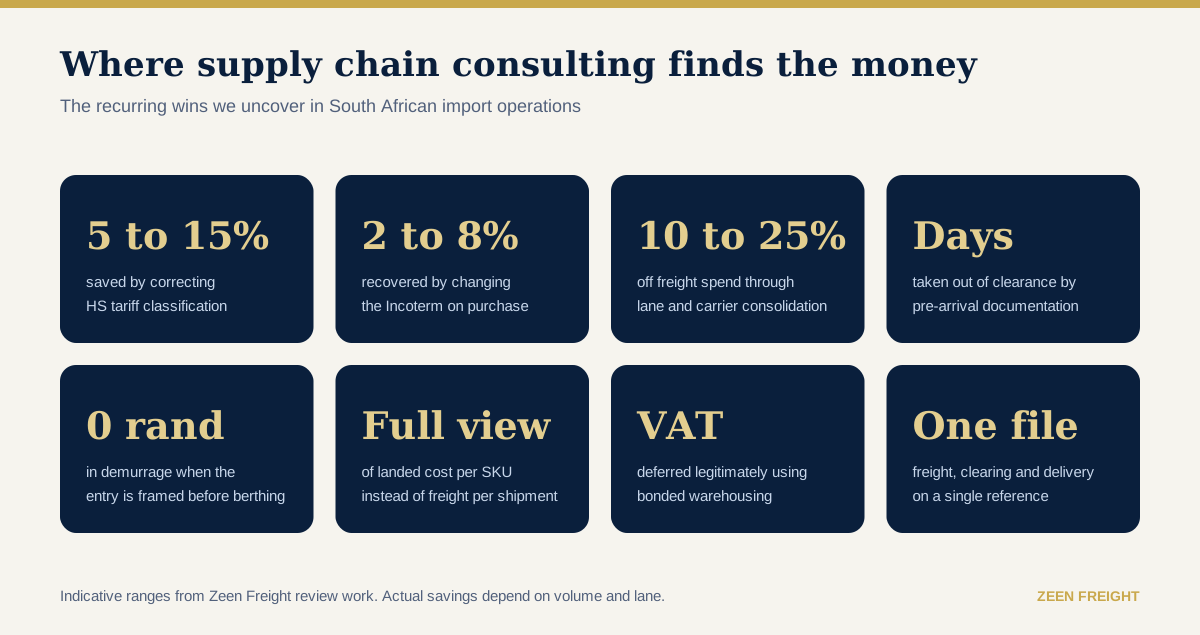
After twelve years of clearing other people’s cargo, the same handful of problems come up again and again — and almost none of them are the freight rate. These are the four we look at first.
A real cost per unit including freight, duty, VAT, clearance and delivery, so suppliers in different countries can be compared honestly.
An audit of what you actually paid rather than what you were quoted, isolating avoidable demurrage, rescue air freight and charges that were never in scope.
Deciding where your cost and risk should start, and restructuring supplier terms where CIF or DDP is quietly costing you control and money.
Checking classifications, permits and preferential origin claims against the goods you actually import, before SARS does it for you.
| Engagement | What you get | Typical use |
|---|---|---|
| Landed cost model | Cost per unit by supplier, mode and route, with sensitivity to freight and exchange rate | Choosing between suppliers or countries; setting selling prices |
| Freight spend review | Line-by-line analysis of a period’s shipments with the leakage quantified | Recurring cost overruns with no obvious cause |
| Mode and route study | Comparison of air, sea, LCL, FCL and cross-border options on total cost and total time | Growing volumes; unreliable lead times |
| Compliance and tariff review | Classification check, permit gap analysis, preferential origin opportunities | Before a SARS audit rather than after one |
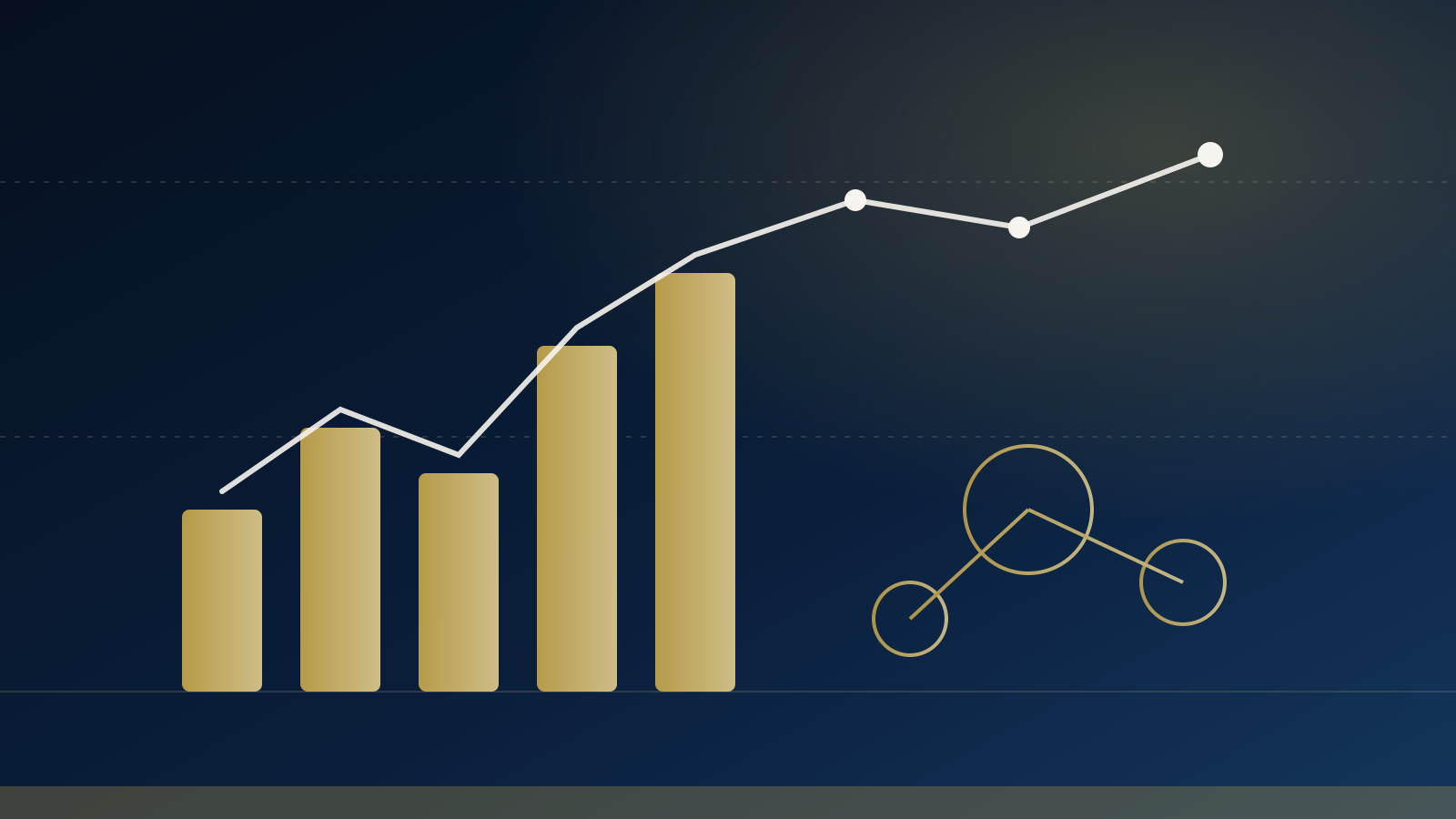
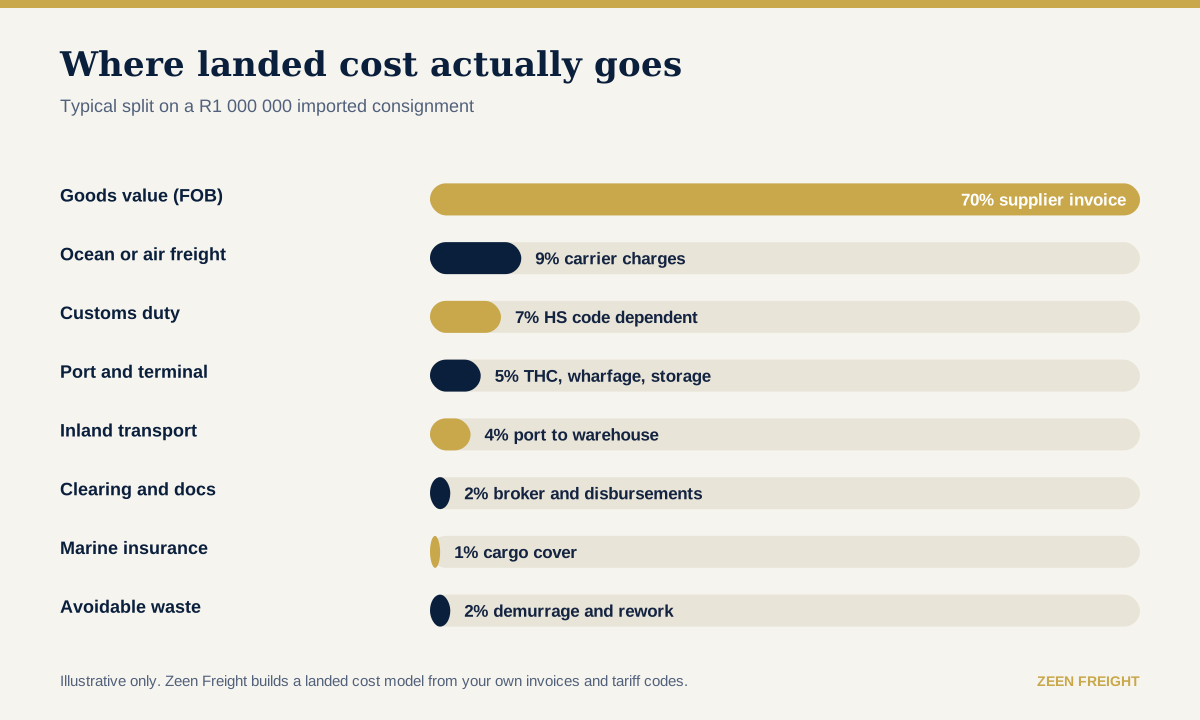
Most importers price off the supplier invoice and discover their real margin at year end. Landed cost modelling replaces that guess with a number.
We build the full cost stack per SKU: ex-works price, inland transport at origin, ocean or air freight, insurance, customs duty at the correct tariff heading, the added tax value uplift, VAT, port and terminal charges, clearing costs, inland delivery, storage and the financing cost of the days your money is tied up in transit. The output usually surprises people — freight and duty on a low-value, high-volume product can be a larger share of landed cost than the goods themselves, which changes what you should be importing and from where.
Once the model exists you can use it. It tells you whether an FOB purchase beats a CIF purchase from the same supplier, whether a Chinese supplier is genuinely cheaper than a Turkish or Indian one after freight and duty, and what a rand movement does to your gross margin before it happens rather than after.
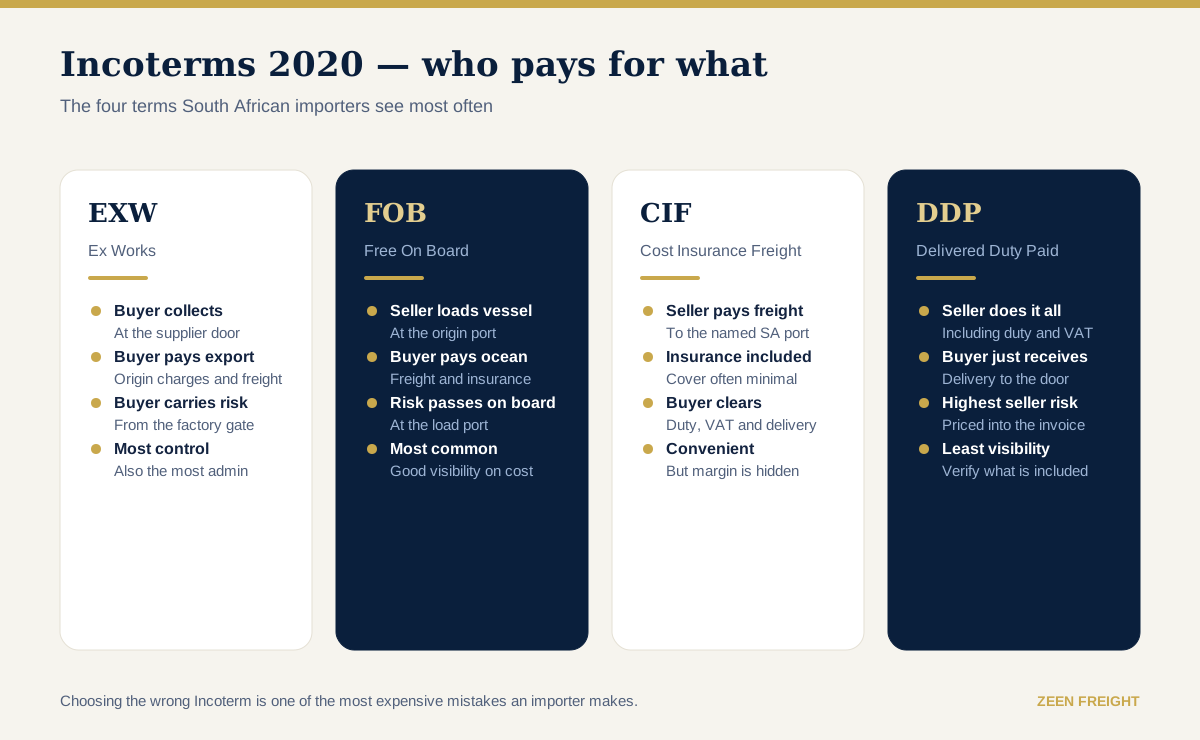
More money is lost to a badly chosen Incoterm than to a badly negotiated freight rate, and it happens quietly.
| Incoterm | Who controls the freight | Where risk passes | Best for |
|---|---|---|---|
| EXW | You, from the supplier's door | At the factory gate | Maximum control, most admin |
| FOB | You, from the origin port | On board the vessel | Most South African importers |
| CFR / CIF | Supplier books the ocean leg | On board, but supplier pays freight | Convenience, at a hidden markup |
| DAP | Supplier, to your premises | On arrival at destination | Simplicity when volumes are small |
| DDP | Supplier, duty paid | On delivery, duty settled | Rarely advisable into South Africa |
The pattern we see most often is a supplier quoting CIF and building a margin into the freight you cannot see, while you lose the ability to choose the carrier, the routing or the transit time. Moving that same relationship to FOB routinely takes real money out of the landed cost and gives you control of the schedule. DDP into South Africa deserves particular caution: the declared value and tariff classification are being handled by someone with no exposure to a SARS audit, but the liability for a wrong entry lands with you as the importer of record.
If you have been with the same forwarder for three years without testing the market, you are almost certainly paying above it.
We take twelve months of your actual invoices and rebuild them line by line — ocean or air freight, surcharges, terminal handling, documentation, clearing fees, storage, delivery — and compare each element to what that lane and volume should command today. The savings are usually not in the headline rate. They sit in the accessorial charges, in demurrage and detention that could have been avoided, in duplicated documentation fees, and in consignments that were split when they should have been consolidated.
The review is deliberately independent of whether you then move the business to us. You get the analysis and the benchmark, and you can use it to renegotiate with your incumbent if that is the better commercial outcome. We would rather be the forwarder you chose on the numbers than the one you inherited.
A SARS post-clearance audit looks back years, and the importer of record carries the liability regardless of who lodged the entry.
We review your historical entries for consistent tariff classification, correct customs valuation including assists and royalties, proper treatment of related-party pricing, and whether preferential origin claims under trade agreements are actually supported by valid certificates. Where we find exposure we quantify it and set out the options, including voluntary disclosure, which is almost always cheaper than being found.
We also fix the process going forward: a documented classification database for your product range, a clear document checklist per supplier, and record-keeping that satisfies the five-year retention requirement. Boring work, but it is the difference between an audit that takes a week and one that becomes an assessment with penalties and interest attached.
Consulting is only worth paying for if it changes a number on your income statement. So every review we run ends with a written set of actions, each with the rand value attached and an owner against it.
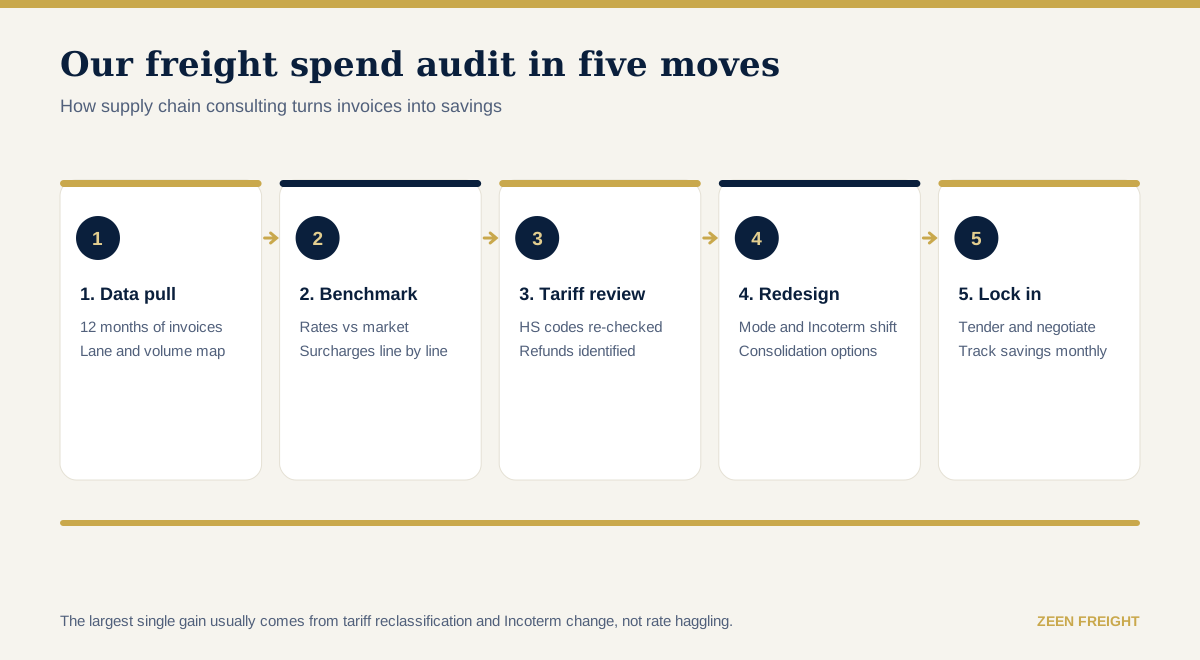
We start with data, not opinions. Twelve months of invoices, entries, packing lists and freight bills tell us far more than a workshop does. From that we build a landed cost per SKU — product cost, freight, insurance, duty, VAT, port and terminal charges, clearing, storage and inland delivery — so you can see what each line actually costs to put on your shelf rather than what the supplier invoice says.
Then we test the four things that move most: tariff classification, Incoterms, routing and consolidation. Misclassification is astonishingly common and it works both ways — overpaying duty for years, or underpaying and carrying an unquantified SARS exposure. Incoterms are usually inherited rather than chosen, and switching from CIF or DDP to FOB frequently reveals margin the supplier was quietly earning on freight. Routing and consolidation is simple arithmetic: fewer, fuller shipments on fewer lanes almost always beats many small ones.
We also stress-test compliance before SARS does it for you. That means checking your importer registration, valuation methodology, origin documentation, permit coverage and record-keeping against what an audit would actually ask for. Finding a gap in a review is inexpensive. Finding it in an audit is not.
The deliverable is deliberately unglamorous: a landed cost model you can keep using, a prioritised action list with values, a recommended Incoterm and routing per lane, a classification opinion per product line, and a short compliance remediation plan. If you want us to implement it, we can — but the model is yours either way.
Related reading: customs clearance and tariff classification, bonded warehousing and duty deferral and sea freight cost structure.
A single figure per unit that includes the supplier price, freight, origin and destination charges, duty, VAT, clearance and inland delivery. Most importers price against the supplier invoice and discover the real number after the third shipment. A proper model lets you compare suppliers in different countries on the same basis, and shows which line items are actually worth negotiating.
They decide where your cost and risk start and stop. Buying CIF or DDP looks simpler because the supplier arranges the freight, but you lose visibility of the destination charges and usually pay more for them. Buying FOB puts the ocean leg and the destination charges under your control. For most South African importers moving regular volume, FOB is where the savings are.
We look at what you actually paid across a period rather than at the rates you were quoted. That surfaces the recurring leakage: demurrage and detention that was avoidable, air shipments used to rescue late sea bookings, duty paid at the wrong tariff heading, and charges appearing on invoices that were never in the quote.
Yes. That means checking tariff classifications against the goods actually being imported, confirming that permits and approvals are in place for regulated commodities, checking whether preferential origin is being claimed where it is available, and making sure the supporting documentation would stand up if SARS asked. Retrospective assessments are far more expensive than getting this right up front.
No. Reviews and modelling can be done independently of who moves the cargo. Obviously we would like the work, but a review that only ever concludes "use us" is not worth paying for.
Recent shipment files — invoices, bills of entry, freight invoices and carrier statements — plus your product list with current tariff headings and your supplier terms. From that we can usually identify where the money is going within a couple of weeks.
Send us the origin, destination, commodity and rough weight or volume and we will come back with a landed cost, not just a freight rate.