Ocean FCL
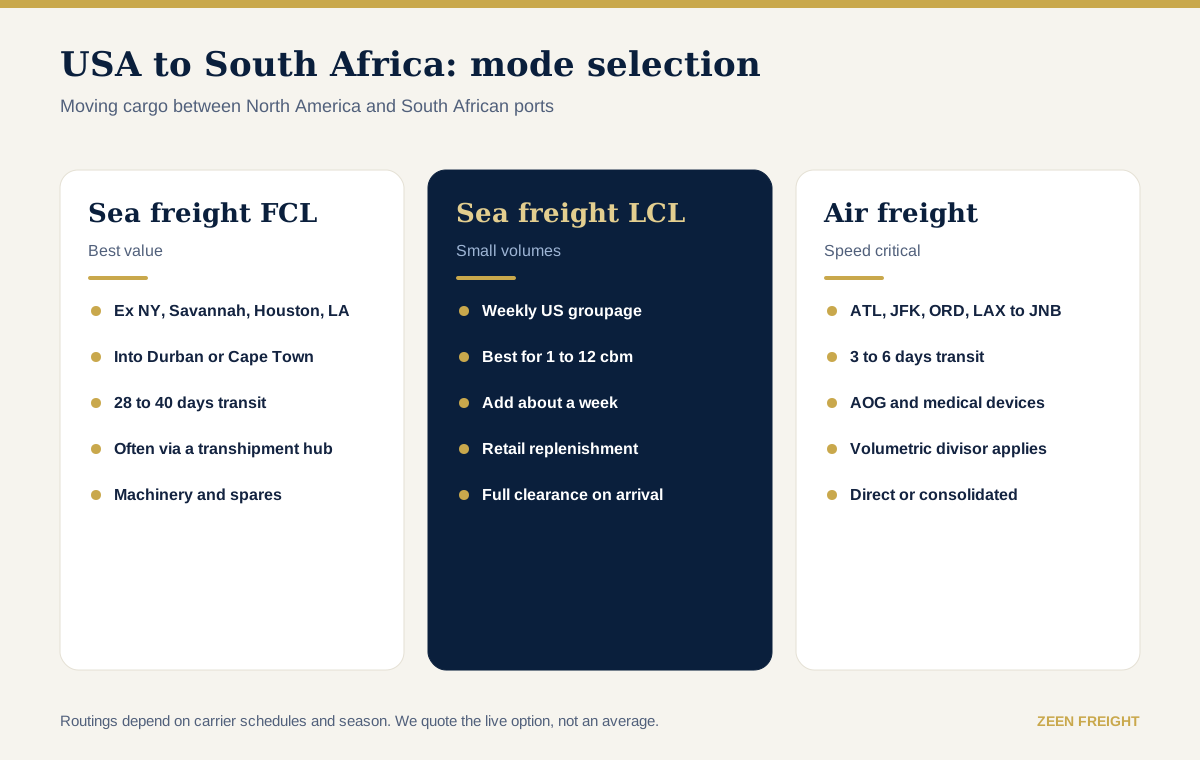
Full containers from the East and Gulf coasts direct to Durban and Cape Town, with West Coast origins routed via transhipment.
USA–SA sea and air freight
Zeen Freight handles commercial imports from the United States into South Africa and South African exports to the US — ocean and air freight, consolidation, AGOA guidance, customs clearance and inland delivery.
The United States is a long lane with no shortcut. What makes the difference is picking the right load port for your supplier's location and getting the export filing and the tariff classification settled before anything moves.
Full containers from the East and Gulf coasts direct to Durban and Cape Town, with West Coast origins routed via transhipment.
Groupage space for part loads out of the main US consolidation hubs, priced per revenue ton.
Priority and deferred air from Atlanta, JFK, Dulles and Chicago into OR Tambo for urgent or high-value cargo.
Several US suppliers received at one origin warehouse and shipped as a single booking with a single customs entry.
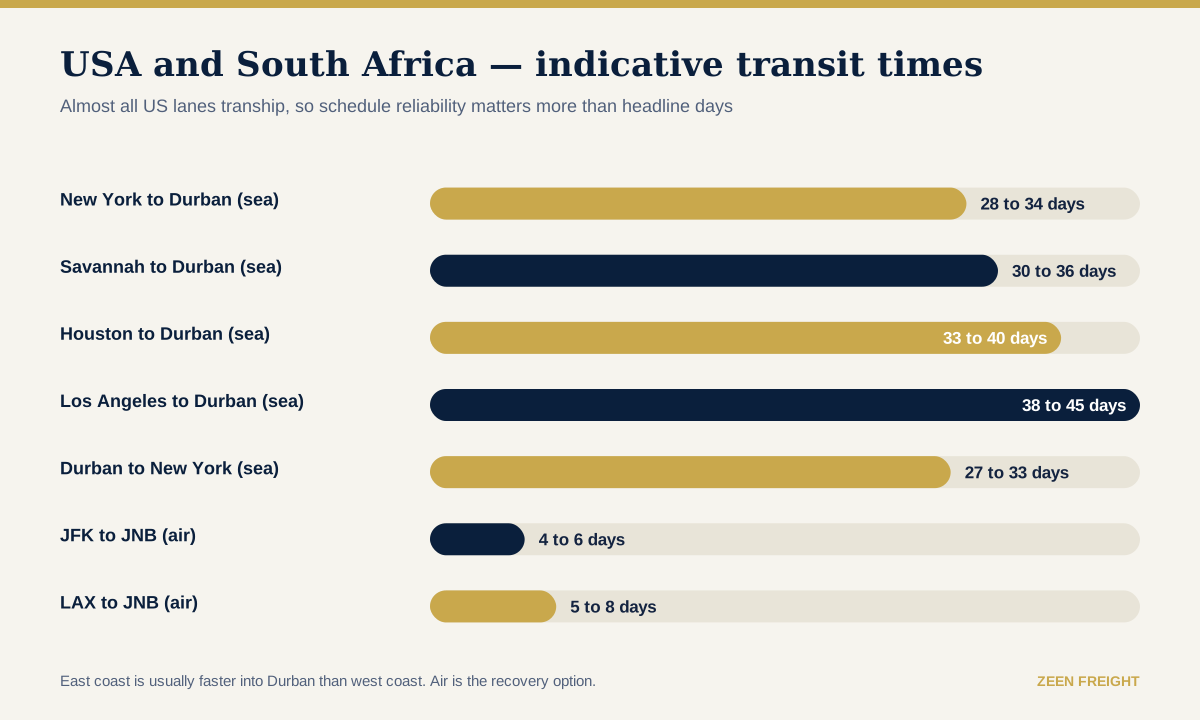
| Origin | Mode | Indicative transit to South Africa |
|---|---|---|
| US East Coast (Newark, Savannah, Charleston) | Ocean FCL | 25–38 days port to port |
| US East Coast | Ocean LCL | 30–45 days port to port |
| US Gulf (Houston) | Ocean FCL | 28–40 days port to port |
| US West Coast (LA, Long Beach) | Ocean FCL via transhipment | 35–50 days port to port |
| Atlanta, JFK, Dulles, Chicago | Air freight | 4–9 days airport to airport |
Ranges are indicative and depend on the carrier, the service string and congestion at either end. Every quote is issued against a named sailing or flight.
Most shipments above the reporting threshold require an Electronic Export Information filing through AES, which generates an ITN that must appear on the documents. Our US partners handle the filing.
Zeen Freight lodges the SAD500 bill of entry as a SARS-licensed clearing agent, classifies the tariff heading, and settles duty plus 15% VAT on the duty-inclusive value.
Qualifying South African-origin goods can enter the US duty free under AGOA where the programme and the origin rules apply. We confirm the current position for your commodity before you ship.
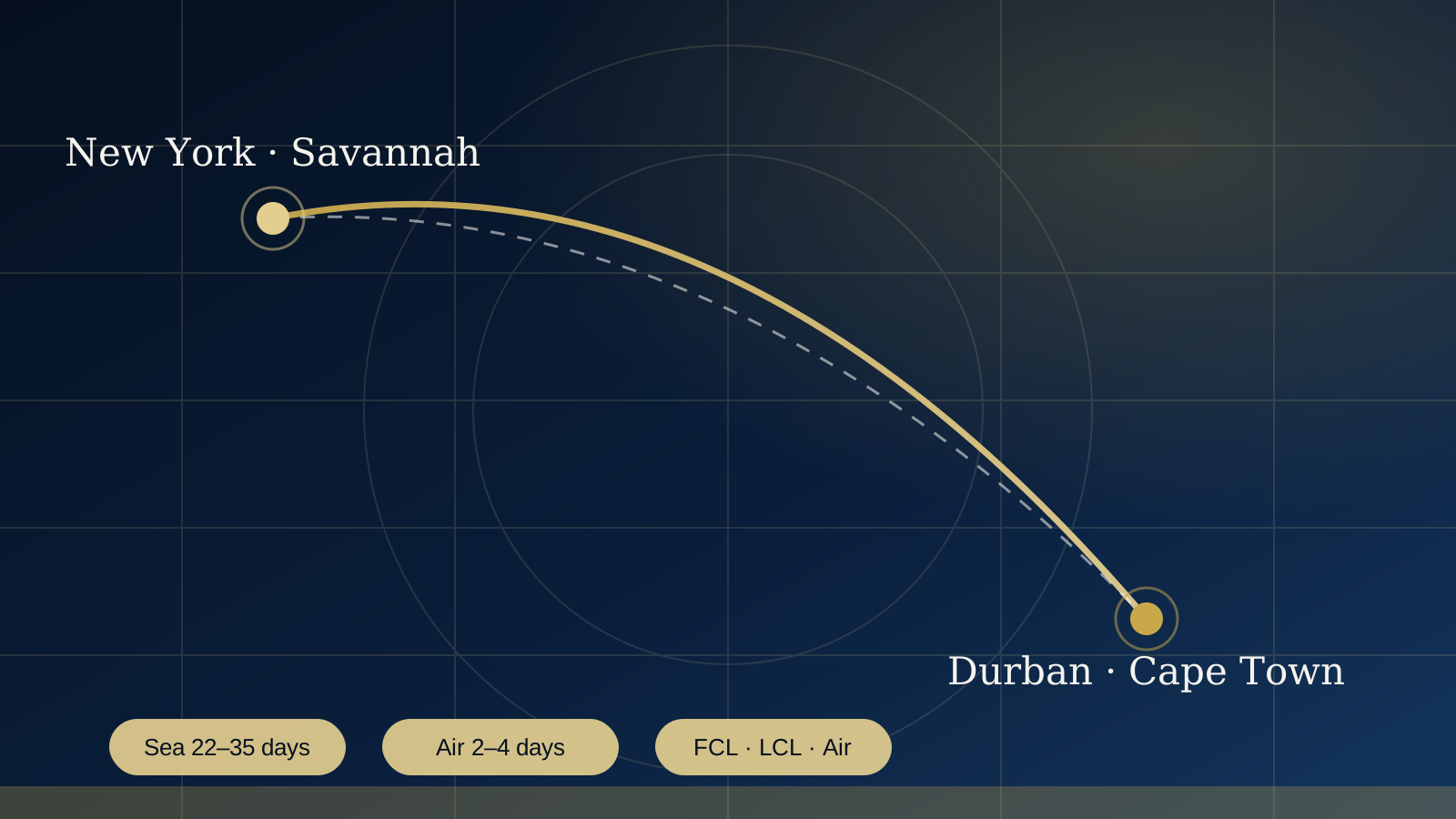
This lane is longer and less direct than most importers expect, and the coast your supplier ships from changes the transit by a fortnight.
East Coast origins — New York, Savannah, Charleston, Norfolk — give the best service into Durban and Cape Town, typically 26 to 32 days with one transhipment, usually through Europe or Singapore. Houston and the Gulf add several days. West Coast origins such as Los Angeles and Long Beach are the slowest option into South Africa and often route the long way around; where a supplier is inland, trucking or railing the container to an East Coast port frequently arrives sooner than sailing from the nearest port.
Air freight from the US into OR Tambo runs two to four days depending on whether the routing is direct from Atlanta or New York or hubs through Europe or the Middle East. On dense, high-value cargo the difference in total cost between air and sea is smaller than it looks once you account for four to five weeks of tied-up working capital, so it is worth quoting both.
Most problems on this lane are commercial rather than logistical.
American suppliers frequently quote "delivered" pricing that stops at a US port or freight forwarder, not at your door in South Africa, and the gap between the two is where unexpected cost appears. Buying FOB at a named US port gives you control of the ocean leg and visibility of what freight actually costs. Where you are buying from an online retailer or marketplace rather than a manufacturer, expect to consolidate multiple small parcels at a US address before shipping — sending them individually multiplies both freight and clearance fees.
On the customs side, US commercial invoices are usually detailed enough to classify properly, which helps. Watch for goods requiring permits or approvals in South Africa — electronics needing ICASA type approval, medical devices needing SAHPRA registration, food requiring DALRRD clearance, and vehicles or parts subject to NRCS requirements. These are all workable, but they need to be dealt with before the container sails rather than after it lands. Our customs clearance service covers permits, classification and duty in more depth.
American suppliers are often excellent at making things and less interested in exporting them. On this lane, the forwarder has to do more of the work — and that is fine, as long as it is planned.
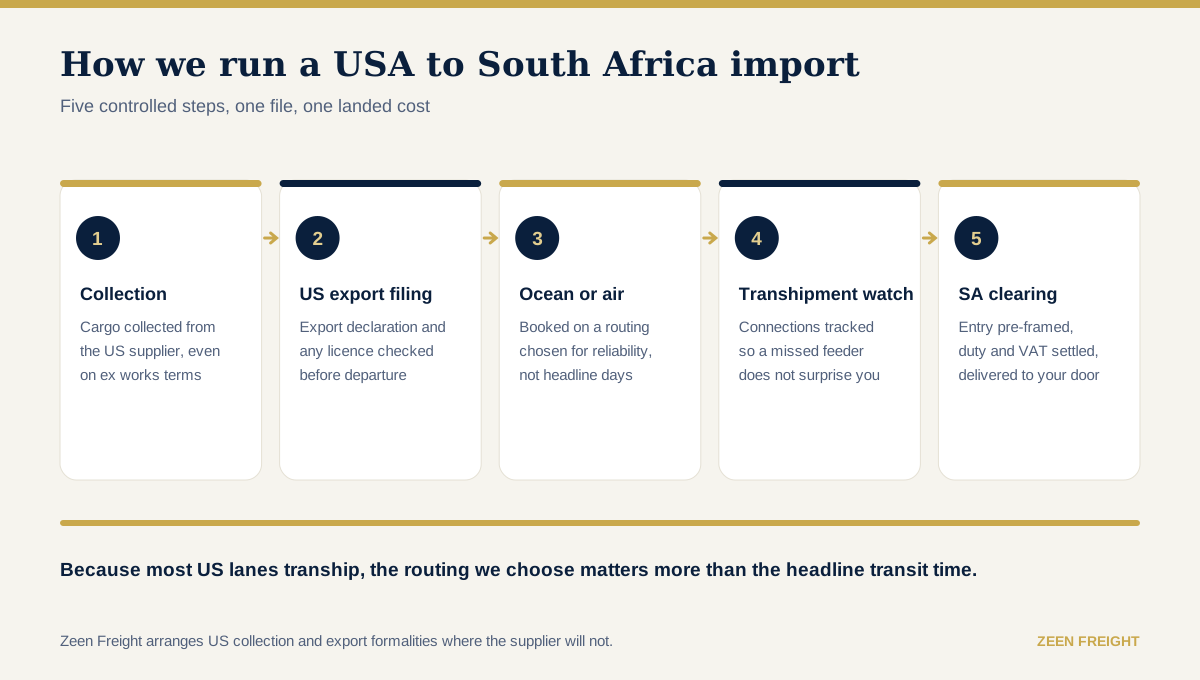
The first thing to settle is the Incoterm. Many US suppliers quote ex works or FOB their own dock and will not handle export formalities at all. If you accept that, someone has to collect from the supplier, complete the US export declaration, deliver to the port or airport and load the cargo. We arrange all of it through our US network, so you get one quote covering collection, origin charges, ocean or air freight, South African clearing and delivery to your door.
Second, check the export controls. Certain US-origin goods — particularly electronics, drones, encryption products, aerospace parts, machine tools and anything with a defence application — are subject to export licensing. Finding out at the airport that a licence is required is expensive. We flag it during quoting so the lead time absorbs it.
Third, plan for transhipment. There is very little direct deep-sea service from the USA to South Africa, so nearly all containers tranship through Europe, the Middle East or West Africa. That is not a problem in itself, but it does mean the reliability of the routing matters more than the headline transit time. A 34-day routing with one dependable connection beats a 30-day routing with a tight one.
Consolidation is the other big lever. If you buy from several US suppliers, we can receive everything at a consolidation warehouse in the US, check it, palletise it and ship one FCL with a single customs entry — instead of paying LCL charges, handling and clearing three separate times.
Importing from the USA, South African duty is assessed on the customs value under the applicable tariff heading, with VAT then calculated on the customs value plus duty plus the prescribed uplift. There is no general preferential rate on US-origin goods coming into South Africa, so classification is where the money is won or lost. A single misapplied tariff heading on a repeat import line can cost more over a year than the freight does.
SARS scrutinises valuation on this lane, particularly where goods are bought from a related party, where samples or warranty replacements are declared at nominal value, or where the invoice does not reconcile with the payment. Declare assists, royalties, tooling contributions and freight correctly, keep the invoice and the bill of lading consistent, and retain the supporting correspondence. If a query does come, we handle it directly with the SARS branch.
Exporting from South Africa to the USA, your buyer will need a compliant invoice, the correct US commodity code, accurate origin evidence and, for food, agricultural and cosmetic products, FDA-related registration and prior notice. We prepare the South African export entry and coordinate with the US customs broker so both sides declare the same thing.
Related: sea freight, air freight, customs clearance and clearing in Durban.
From the US East Coast, ocean FCL to Durban is typically 25 to 38 days port to port and LCL 30 to 45 days. West Coast origins usually tranship and run longer, often 35 to 50 days. Air freight from Atlanta, New York or Washington into OR Tambo is normally 4 to 9 days depending on routing and whether the service is direct.
For ocean freight, Newark and New York, Savannah, Charleston, Norfolk and Houston are the usual load ports, with Los Angeles and Long Beach handled via transhipment. For air freight, Atlanta, New York JFK, Washington Dulles and Chicago are the common gateways into OR Tambo.
The African Growth and Opportunity Act allows qualifying goods of South African origin to enter the United States duty free under certain tariff headings. Eligibility depends on the product, the origin rules and the programme being in force at the time of entry. If you are exporting to the US it is worth checking before you ship, because the duty saving can be substantial. We confirm the current position for your commodity as part of the quote.
A commercial invoice, a packing list, and a bill of lading or air waybill. US exports generally require an Electronic Export Information filing through AES, which produces an ITN, for shipments above the reporting threshold. On the South African side you need a customs client code registered with SARS, and we lodge the SAD500 bill of entry with the tariff classification and valuation.
Duty is set by the tariff heading of the goods, not the country of origin, and commonly falls between zero and 30% of the customs value. VAT of 15% is then calculated on the duty-inclusive value. Some commodities attract ad valorem excise. We classify the goods and give you a landed-cost figure before you commit to the purchase.
Yes. Cargo from multiple US vendors can be received at an origin warehouse, checked against your packing lists and shipped as a single FCL or LCL booking. That gives you one freight cost and one customs entry rather than several, which is almost always cheaper than shipping each order separately.
Yes, in both directions. Imports from the US into South Africa and South African exports to the US are both handled end to end, including the export documentation, the customs entry and coordination with our US-side partners for delivery.
Send us the origin, destination, commodity and rough weight or volume and we will come back with a landed cost, not just a freight rate.