Ocean FCL
Full 20ft and 40ft containers from Jebel Ali, Khalifa Port and Sharjah into Durban and Cape Town on frequent weekly services.
UAE–SA sea and air freight
Zeen Freight moves cargo between the United Arab Emirates and South Africa by sea and air — Jebel Ali, Khalifa Port and Sharjah for ocean, Dubai and Abu Dhabi for air, with SARS customs clearance and inland delivery on arrival.
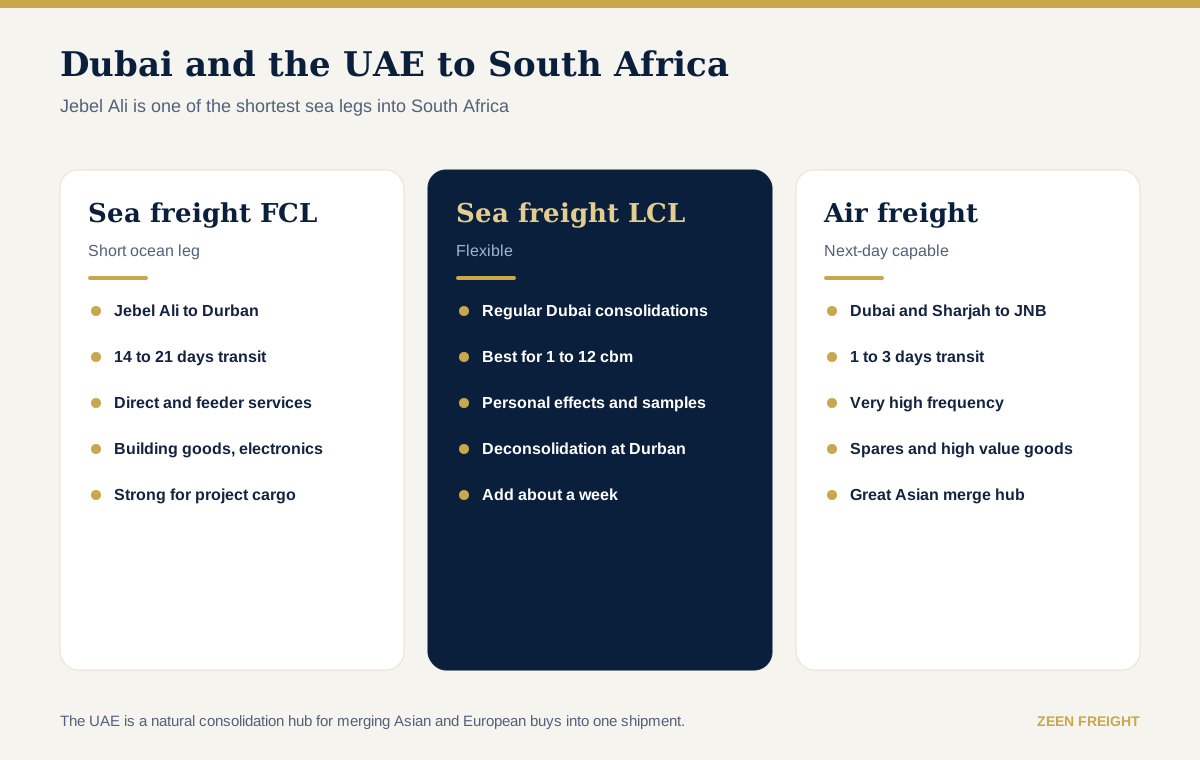
Jebel Ali to Durban is roughly two to three weeks on the water, about half the time of a Far East sailing. That makes the UAE useful not only for Emirati suppliers but as a consolidation point for cargo coming from India, Turkey and the wider Gulf.
Full 20ft and 40ft containers from Jebel Ali, Khalifa Port and Sharjah into Durban and Cape Town on frequent weekly services.
Groupage space for part loads, priced per revenue ton, consolidated in the UAE and deconsolidated on arrival in South Africa.
Short-transit air from Dubai and Abu Dhabi into OR Tambo, typically two to five days, for urgent or high-value cargo.
Cargo from India, Pakistan, Turkey and the Gulf brought together at Jebel Ali and shipped south as one booking.
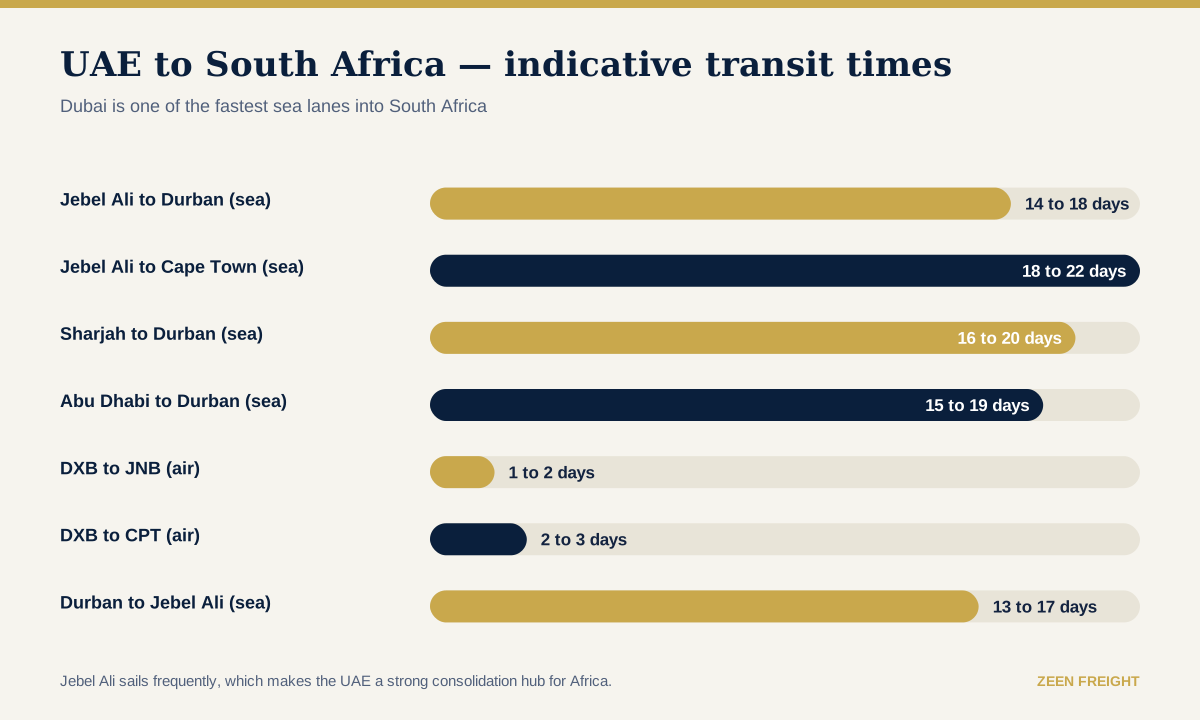
| Route | Mode | Indicative transit |
|---|---|---|
| Jebel Ali → Durban | Ocean FCL | 14–22 days port to port |
| Jebel Ali → Durban | Ocean LCL | 20–30 days port to port |
| Jebel Ali → Cape Town | Ocean FCL | 18–26 days port to port |
| Dubai (DXB) → OR Tambo (JNB) | Air freight | 2–5 days airport to airport |
| Abu Dhabi (AUH) → OR Tambo (JNB) | Air freight | 3–6 days airport to airport |
Indicative only. Direct services are faster than transhipped ones, and Durban congestion can add several days to the landside timeline.
As a licensed clearing agent we lodge the SAD500 bill of entry, classify the tariff heading, and settle duty plus 15% VAT on the duty-inclusive customs value.
Certificates of origin are commonly needed on this lane. Some commodities also require an ITAC import permit or an NRCS letter of authority before release.
Goods leaving a UAE free zone need the correct export documentation and origin evidence. We confirm what your supplier must provide before the container is loaded.
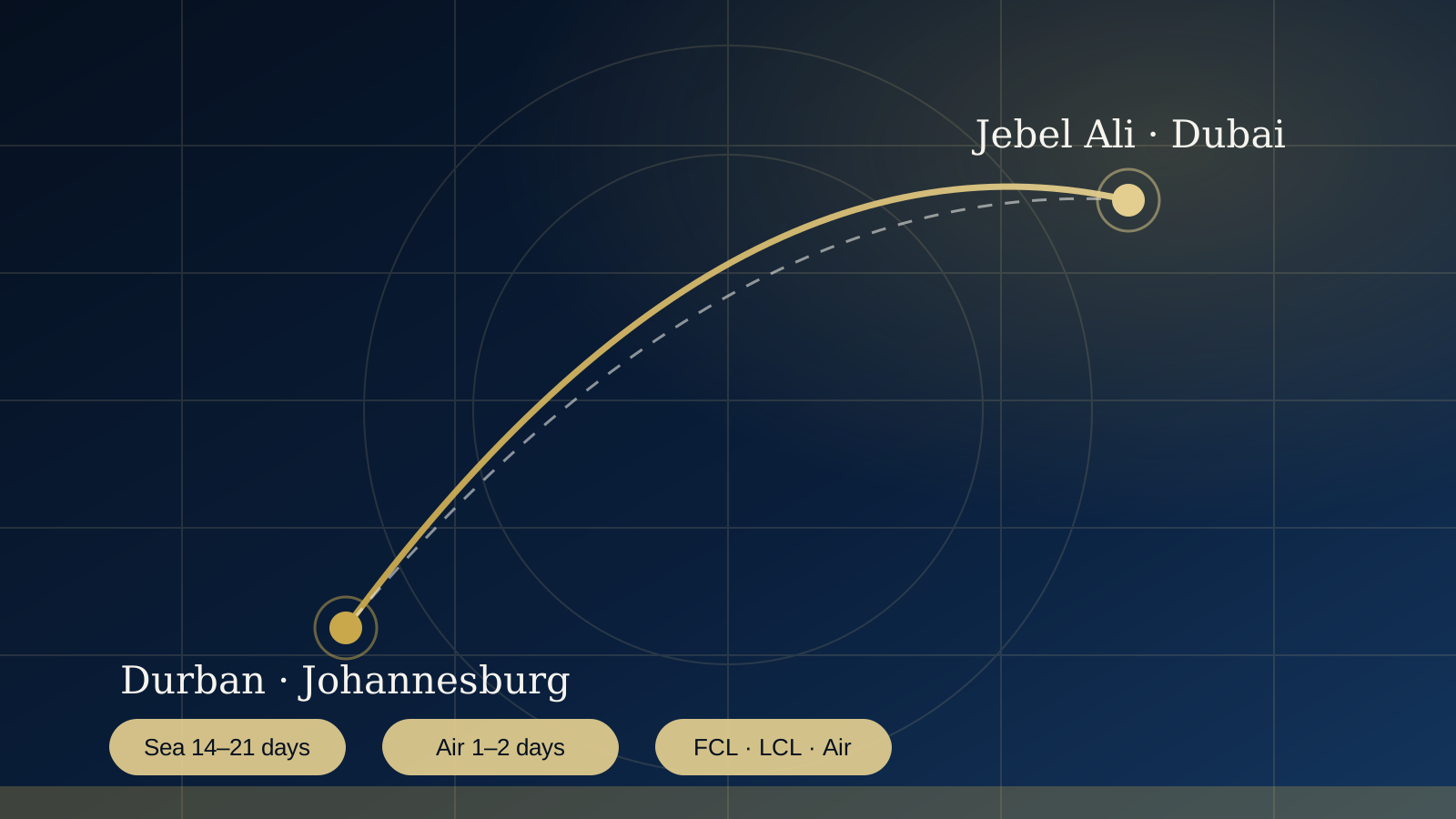
The UAE is the shortest deep-sea lane into South Africa from the northern hemisphere, and that changes what is possible.
Jebel Ali to Durban runs 14 to 21 days, roughly half the transit from China and materially faster than Europe or the US East Coast. Sharjah and Abu Dhabi are also worked. Because Jebel Ali is one of the world's major transhipment hubs, it is often the cheapest and fastest route for cargo that does not originate in the UAE at all — Indian, Turkish, Pakistani and Far Eastern goods frequently move better consolidated through Dubai than shipped direct.
By air, Dubai to OR Tambo is an overnight flight with very high frequency, which makes it the most reliable express corridor into South Africa. A one to two day door-to-door is realistic. For urgent spares, high-value electronics, jewellery and time-critical trade samples this lane is hard to beat, and the volume of capacity means space is available even at short notice.
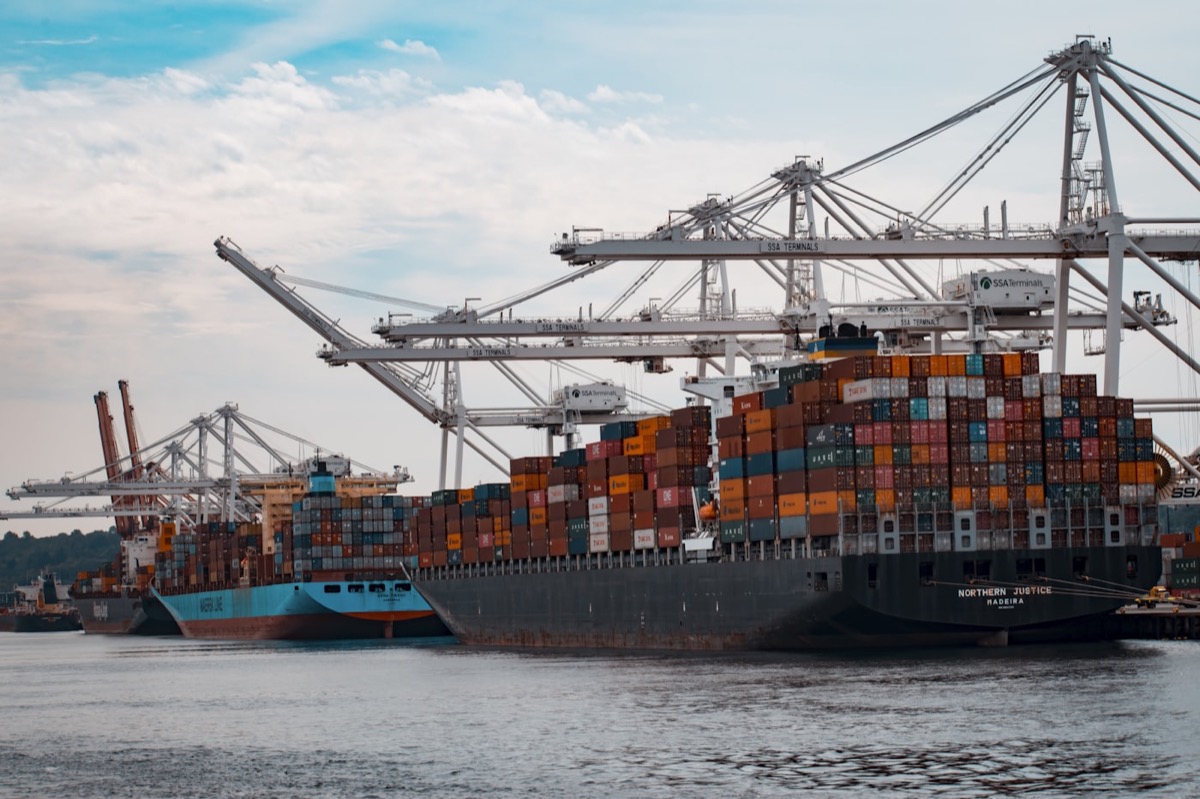
A large share of this lane is not commercial cargo at all — it is South Africans coming home.
For household goods and personal effects moving from Dubai or Abu Dhabi to South Africa we handle the shipment as a full or shared container, prepare the packing inventory customs requires, and lodge the entry under the rebate provisions for returning residents where you qualify. That relief is real but conditional: it depends on how long you have been abroad, whether the goods were owned and used by you before the move, and getting the documentation right at the outset. Vehicles are a separate and much stricter matter, requiring an ITAC import permit that has to be in hand before shipping.
On the commercial side, consolidation is what makes this lane efficient. If you buy from several UAE or regional suppliers we combine the cargo at a Dubai CFS into one container, which turns multiple LCL consignments and multiple sets of destination charges into a single FCL, a single clearance and a single delivery. On repeat programmes that alone typically takes a meaningful percentage off landed cost.
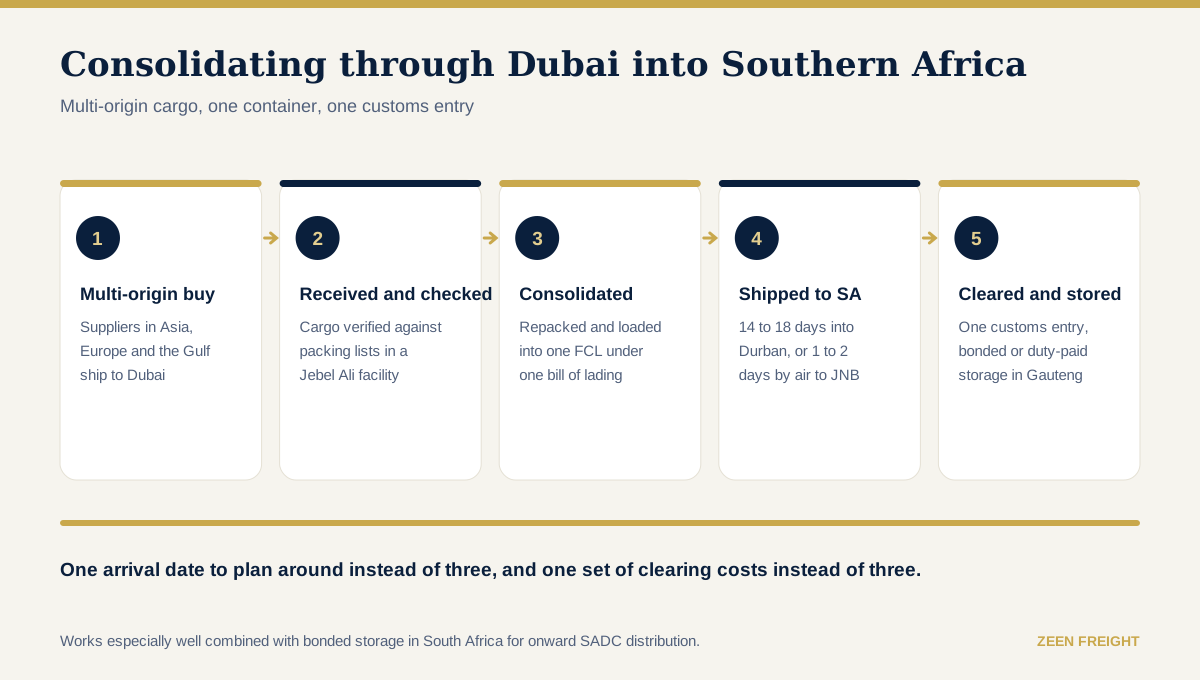
Dubai is not just an origin, it is a hub. If you buy from Asia, Europe and the Middle East and sell into Southern Africa, consolidating through Jebel Ali often beats shipping directly from each source.
The logic is simple. Jebel Ali has frequent sailings into Durban and Cape Town, short transit times, deep free-zone warehousing capacity and no shortage of consolidation options. Cargo from multiple origins can be received into a Dubai facility, checked, repacked if necessary and shipped onward as a single full container with one bill of lading and one South African customs entry. You pay one set of clearing costs instead of three, and you get one arrival date to plan around instead of three.
For distributors serving the wider region, the same structure works even better when combined with bonded storage in South Africa. Stock lands in Durban, moves into a customs-controlled warehouse without duty being paid, and is then either entered for home use as it sells locally or re-exported into Zimbabwe, Zambia, Botswana, Mozambique or Namibia without South African duty ever becoming payable on those units.
Air freight from Dubai is close to a next-day service into Johannesburg, which makes the UAE the obvious recovery route when a sea shipment is late or a production line is down. We run both modes on the same file, so switching part of a shipment to air is a decision, not a new project.
A large share of this lane is people moving home. South Africans returning from the Gulf and expatriates relocating to South Africa can generally bring used household goods and personal effects in free of duty, provided the owner qualifies as an immigrant or returning resident, the goods were genuinely owned and used abroad, and a properly valued inventory is submitted with the passport, permit and supporting proof of residence abroad.
Vehicles are the exception and they catch almost everyone. A motor vehicle imported into South Africa normally requires an ITAC import permit and, for returning residents, strict conditions on prior ownership and how long the vehicle must be kept afterwards. Left-hand-drive vehicles, vehicles that do not meet local homologation requirements and recent-model vehicles are frequently not permitted at all. Confirm the position before you ship, not after.
Practically, we offer a dedicated 20ft or 40ft container for a full household, a shared groupage container for a part load, and air freight for the essentials you need immediately. We prepare the inventory, lodge the declaration, arrange the port clearing in Durban or Cape Town and deliver to your new address, including unpacking where you want it.
Related: sea freight services, air freight, bonded warehousing and onward distribution into SADC.
Ocean FCL from Jebel Ali to Durban is typically 14 to 22 days port to port, which makes it one of the shortest deep-sea lanes into South Africa. LCL runs 20 to 30 days once consolidation and deconsolidation are added. Air freight from Dubai to OR Tambo is normally 2 to 5 days, with same-week uplift usually available.
Jebel Ali is the primary load port and one of the largest container terminals in the world. Khalifa Port in Abu Dhabi and Sharjah are also used depending on the service. For air freight we work through Dubai International, Al Maktoum and Abu Dhabi into OR Tambo and Cape Town.
Jebel Ali is a major transhipment hub, so cargo originating in India, Pakistan, Turkey, the wider Gulf and parts of the Far East is often consolidated there before sailing south. That can produce a shorter total transit and a better rate than a direct service from the origin country, and it lets you combine cargo from several regions into one shipment.
A commercial invoice, a packing list and a bill of lading or air waybill, plus a customs client code registered with SARS. We lodge the SAD500 bill of entry, classify the tariff heading and calculate duty and 15% VAT. Certificates of origin are commonly required, and some commodities need an ITAC permit or an NRCS letter of authority.
Duty is determined by the tariff heading of the goods rather than where they were shipped from, and typically ranges from zero to 30% of the customs value. VAT of 15% is calculated on the duty-inclusive value. We classify the commodity and quote a landed cost so there are no surprises at clearance.
Household and personal effects are a different category from commercial cargo, with different documentation and different SARS treatment for returning residents and immigrants. Tell us up front if that is what you are moving and we will confirm what applies to your situation and quote accordingly, rather than treating it as ordinary commercial freight.
Yes. Cargo from multiple suppliers or free-zone warehouses can be received at one point, checked against your packing lists and shipped as a single FCL or LCL booking with one customs entry on arrival.
Send us the origin, destination, commodity and rough weight or volume and we will come back with a landed cost, not just a freight rate.