Ocean FCL
Full 20ft and 40ft containers from the main Chinese ports into Durban and Cape Town, booked directly with the carrier so the rate and the destination charges are visible to you.
China–SA sea and air freight
Zeen Freight is a SARS-licensed freight forwarder and customs clearing agent handling imports from China to South Africa — supplier collection, consolidation, ocean or air freight, regulatory approvals, customs clearance and inland delivery.
This is the highest-volume import lane into South Africa and also the one where importers lose the most money — usually to destination charges they did not see coming, or to a tariff classification nobody checked. The freight itself is the easy part.
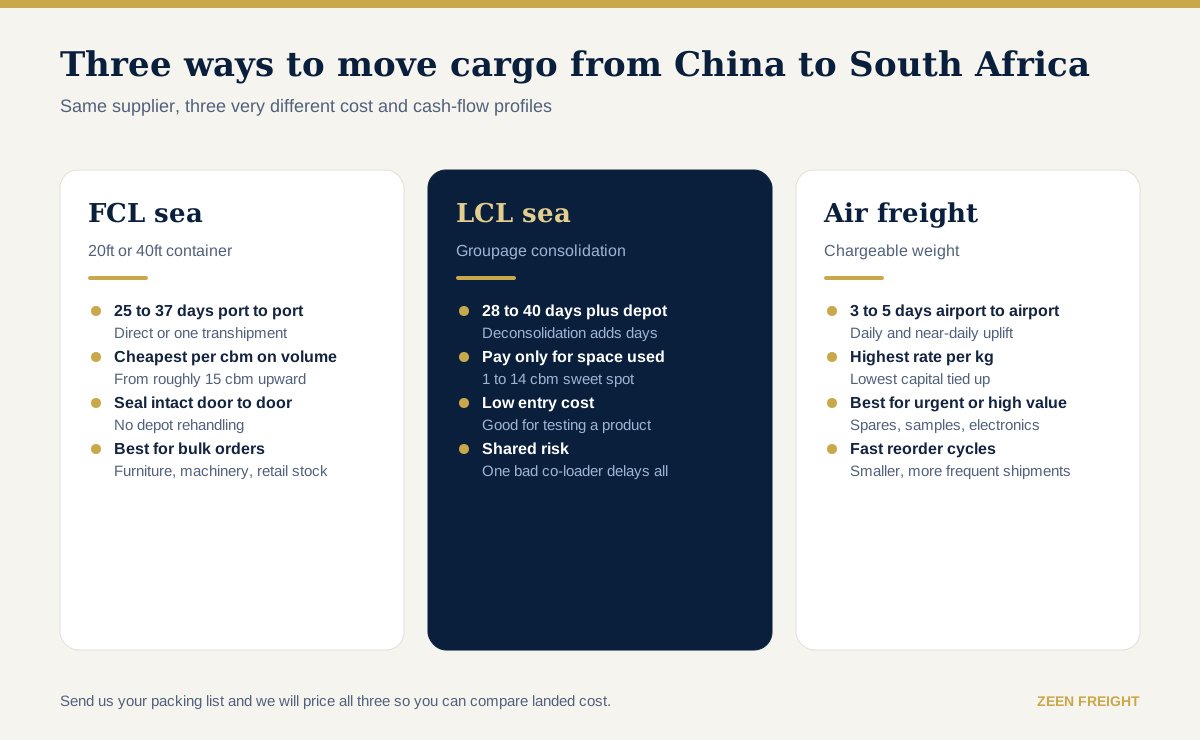
Full 20ft and 40ft containers from the main Chinese ports into Durban and Cape Town, booked directly with the carrier so the rate and the destination charges are visible to you.
Groupage for part loads, priced per revenue ton, with weekly consolidations out of Shanghai, Ningbo and Shenzhen.
Cargo collected from several factories, checked against your packing lists at an origin warehouse and shipped as one booking with one customs entry.
Priority and deferred air from Guangzhou, Shanghai and Hong Kong into OR Tambo when a sea shipment will not arrive in time.
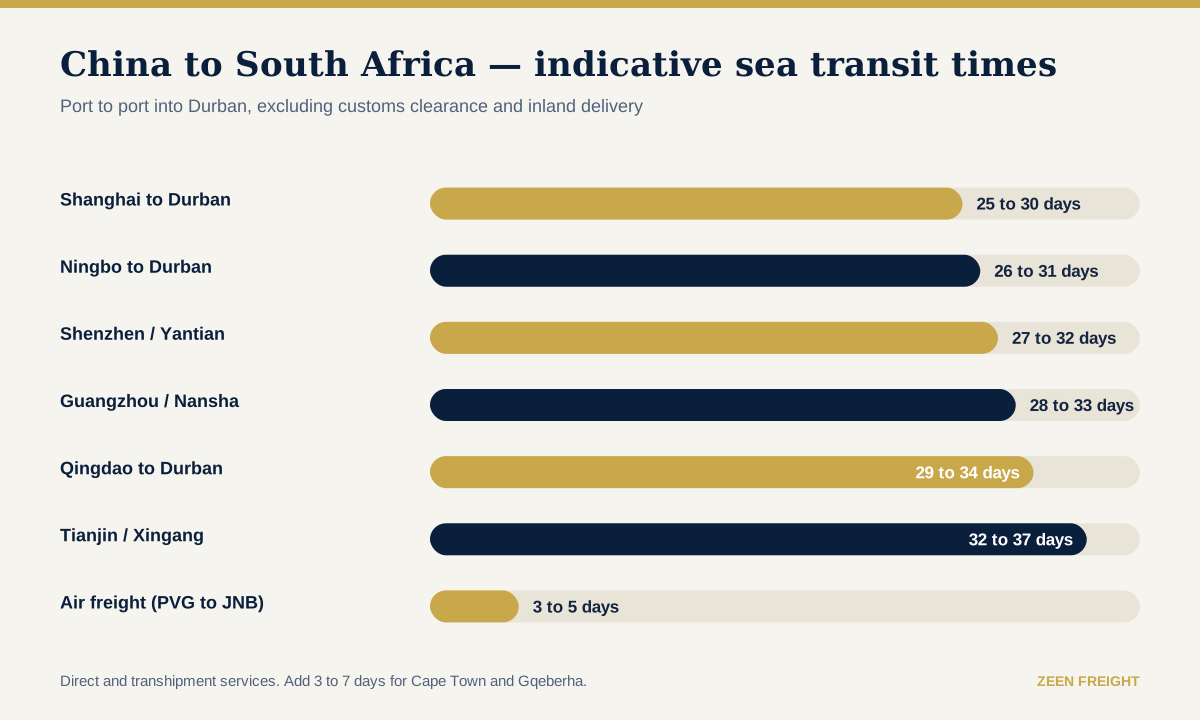
| Origin | Mode | Indicative transit to Durban |
|---|---|---|
| Shanghai / Ningbo | Ocean FCL | 25–35 days port to port |
| Shenzhen / Yantian | Ocean FCL | 25–35 days port to port |
| Qingdao / Xiamen | Ocean FCL | 28–38 days port to port |
| Main Chinese ports | Ocean LCL | 30–45 days port to port |
| Guangzhou / Shanghai / Hong Kong | Air freight | 4–8 days airport to airport |
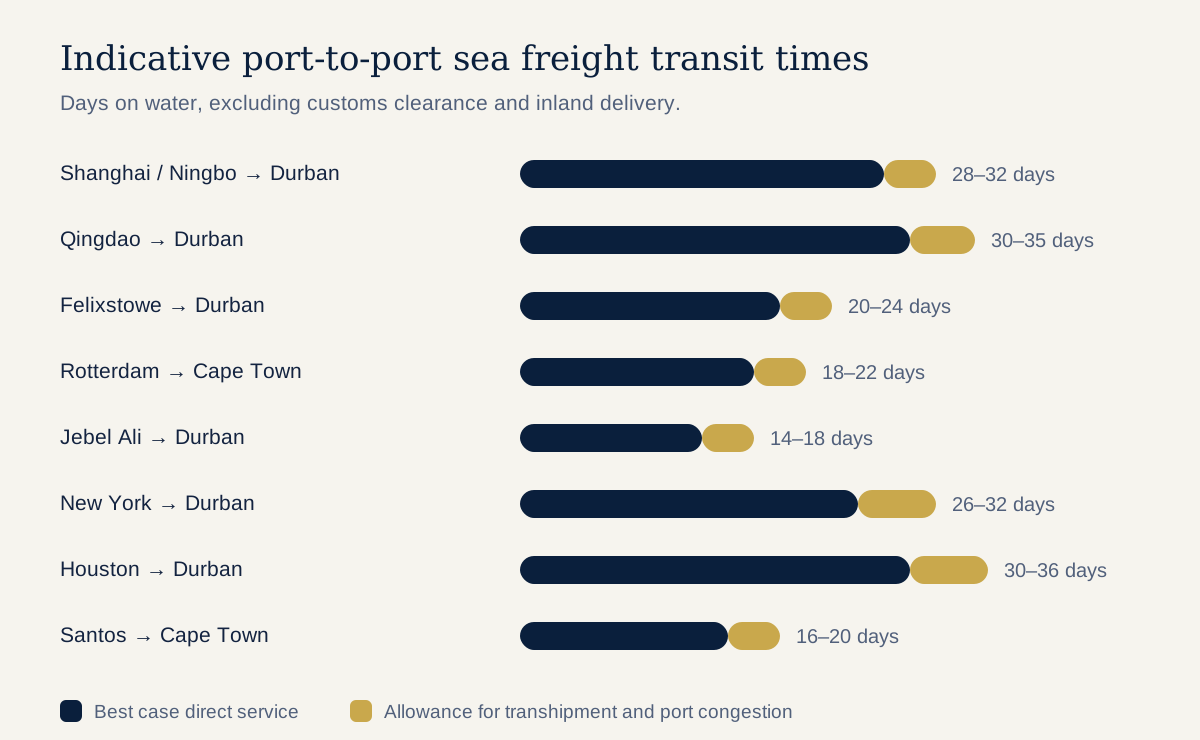
Ranges are indicative. Direct services are faster than transhipped ones, and Chinese New Year reliably compresses capacity and stretches transit for several weeks either side.
Chinese goods are more likely than most to need an approval before SARS will release them. None of these can be fixed quickly once the container has landed.
Required for a wide range of electrical and electronic goods, lamps, appliances, and certain building and automotive products. Apply before you order, not after.
Needed for controlled goods including some used items, machinery and specific commodity categories.
The heading you declare drives duty, VAT and whether a permit applies at all. We classify before purchase so your landed cost is real.
Certain Chinese-origin products carry additional anti-dumping duty. We check the current list against your commodity before you commit.
Suppliers will usually name the port closest to their factory, which is not always the port with the best service to Durban. Shanghai and Ningbo carry the most direct capacity to South Africa and generally give the shortest transit. Shenzhen, Yantian and Guangzhou serve the Pearl River Delta and are the natural choice for electronics, lighting and consumer goods. Qingdao and Tianjin serve northern China and typically add a few days. Xiamen and Fuzhou handle a lot of furniture and stone.
Where suppliers sit in different provinces, consolidating into one container at a single Chinese port almost always beats shipping two part loads. We arrange origin consolidation at a CFS in China, combine cargo from multiple factories into one FCL, and ship it as a single entry — one bill of lading, one clearance, one delivery.
There is no single "China duty rate". Your rate comes from the tariff heading your product falls under, and Chinese commercial invoices are famously unhelpful about it.
A supplier writing "plastic goods", "machine parts" or "LED products" on an invoice has no obligation to know Schedule 1 of the South African Customs and Excise Act, and the description they use can put your goods into a heading carrying 20% duty when the correct heading carries none. We classify from the actual product — composition, function, how it is presented for retail sale — and we do it before the container sails, while there is still time to get a corrected invoice.
Two further traps on this lane are worth naming. Undervaluation, where a supplier offers to declare a lower value to "save you duty", exposes you as the importer of record to penalties, interest and a re-determination across every past entry — the saving is never worth it. And anti-dumping duties apply to a number of Chinese product categories into South Africa, sometimes at rates that make the import uneconomic; finding that out at the border rather than at the quotation stage is an expensive way to learn it. Our customs clearance page explains how duty, the added tax value uplift and VAT stack up.
The single most predictable cause of a late shipment from China is a holiday everyone knew about.
Factories close for roughly two weeks around Chinese New Year, and production does not resume at full pace for another week or two after that. Bookings in the four to six weeks beforehand are heavily oversubscribed, rates rise, and space is allocated to whoever booked earliest. Golden Week at the start of October does a smaller version of the same thing.
Planning around it is not complicated, it just has to happen early. Place orders so cargo is gate-in before the pre-holiday rush rather than in it, book space three to four weeks out instead of one, and if a deadline genuinely cannot move, split the order and air freight the critical portion. We flag these windows to clients in advance rather than after the rate has doubled.
The freight is rarely the hard part of a China import. The hard part is making sure what leaves the factory is what you ordered, and that it is packed to survive five weeks at sea.
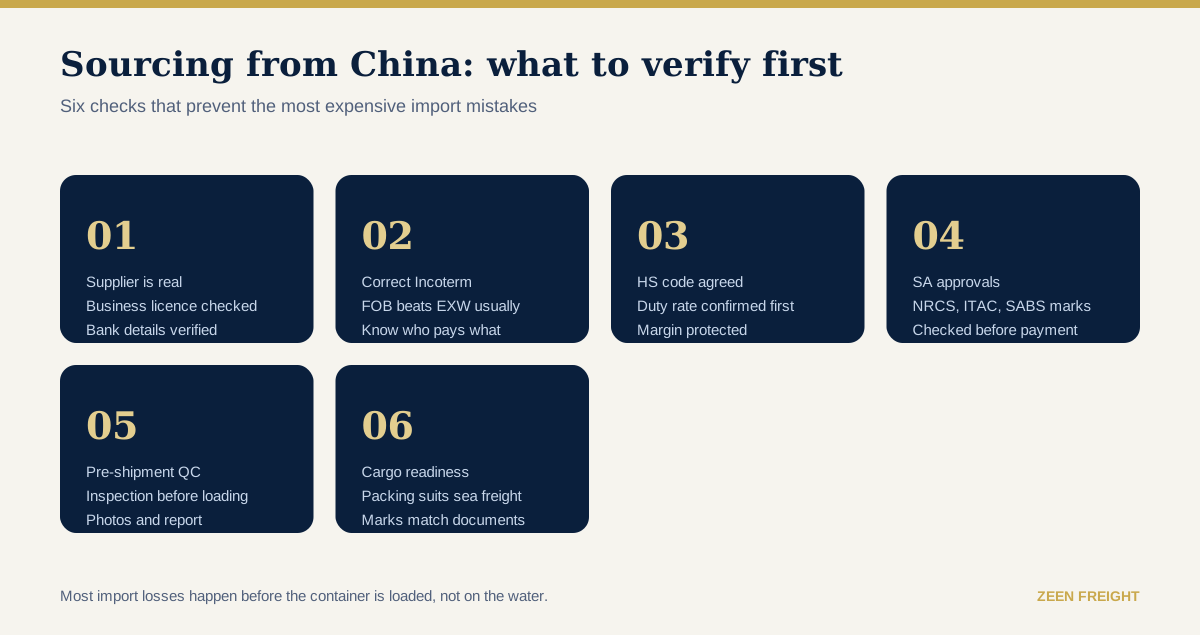
Before you pay a deposit, verify that the supplier is the manufacturer and not a trading company adding a layer of margin, confirm the business licence and export rights, and get the product specification in writing with tolerances. Ask for the HS code the supplier declares on export and check it against the South African tariff yourself — the two do not always agree, and the South African classification is the one that determines your duty.
Insist on a pre-shipment inspection on any order large enough to hurt. A third-party inspector at the factory checking quantity, workmanship, labelling and carton marks costs a fraction of a container and catches the problems that are impossible to fix once the cargo is at sea. Where products fall under compulsory specification in South Africa, confirm the NRCS requirements and any letter of authority before goods are made, not after they arrive.
Packing matters more than people expect. Cartons need to survive stacking, humidity and handling; pallets need to be treated and marked if timber is used; and export cartons should carry your purchase order and SKU markings so receiving is quick. Poor packing is the single most common cause of damage claims on this lane.
If you buy from several suppliers, consolidation is where the money is. We can receive cargo from multiple factories at an origin warehouse, check it, consolidate it into one FCL and ship it as a single shipment with a single customs entry — instead of paying LCL charges and separate clearing costs three or four times over.
Next steps: read our sea freight guide, check the duty position on our customs clearance page, or plan the port leg with our Durban team.
Ocean FCL from Shanghai, Ningbo or Shenzhen to Durban usually runs 25 to 35 days port to port. LCL runs 30 to 45 days because of consolidation at origin and deconsolidation on arrival. Air freight from Guangzhou, Shanghai or Hong Kong to OR Tambo is typically 4 to 8 days. Add a few working days at each end for collection, customs clearance and inland delivery.
FOB is usually the best balance for South African importers. Your supplier delivers the cargo to the load port and clears it for export, and you control the ocean leg, the carrier and the destination charges. EXW gives you more control but you take on Chinese inland transport and export clearance. CIF hands control of the freight to the supplier, which often means you pay inflated destination charges you cannot negotiate. If you are quoted DDP, ask exactly which South African charges are included.
A customs client code registered with SARS, a commercial invoice, a packing list, and a bill of lading or air waybill. Many Chinese products also need regulatory approval before they can be released: an NRCS letter of authority for electrical and electronic goods, lamps, appliances and certain building materials, an ITAC import permit for controlled goods, and SABS or SAHPRA approval in some categories. We check this against your commodity codes before you place the order, not after the cargo arrives.
Duty depends entirely on the tariff heading, not the country. Rates commonly range from zero to 30% on the customs value, with 15% VAT on top of the duty-inclusive value. Some categories also attract ad valorem excise or anti-dumping duty. We classify the goods and give you a landed-cost estimate before you commit, because misclassification is the most expensive mistake on this lane.
Yes. Multi-supplier consolidation is one of the most useful things we do on this lane. Cargo from several factories is collected into one warehouse at origin, checked against your packing lists, and shipped as a single container or a single LCL booking. It reduces freight cost per unit and gives you one customs entry instead of several.
Shanghai, Ningbo, Shenzhen and Yantian, Guangzhou and Nansha, Qingdao and Xiamen for ocean freight, with Hong Kong used for transhipment and for air. Choosing the port closest to your factory usually saves more than negotiating the ocean rate.
Yes. Zeen Freight is a SARS-licensed customs clearing agent, so the same team that books your freight lodges the SAD500 entry, classifies the tariff, settles duty and VAT and arranges inland delivery from Durban to Gauteng or wherever the cargo is going.
Send us the origin, destination, commodity and rough weight or volume and we will come back with a landed cost, not just a freight rate.