Full truckload (FTL)
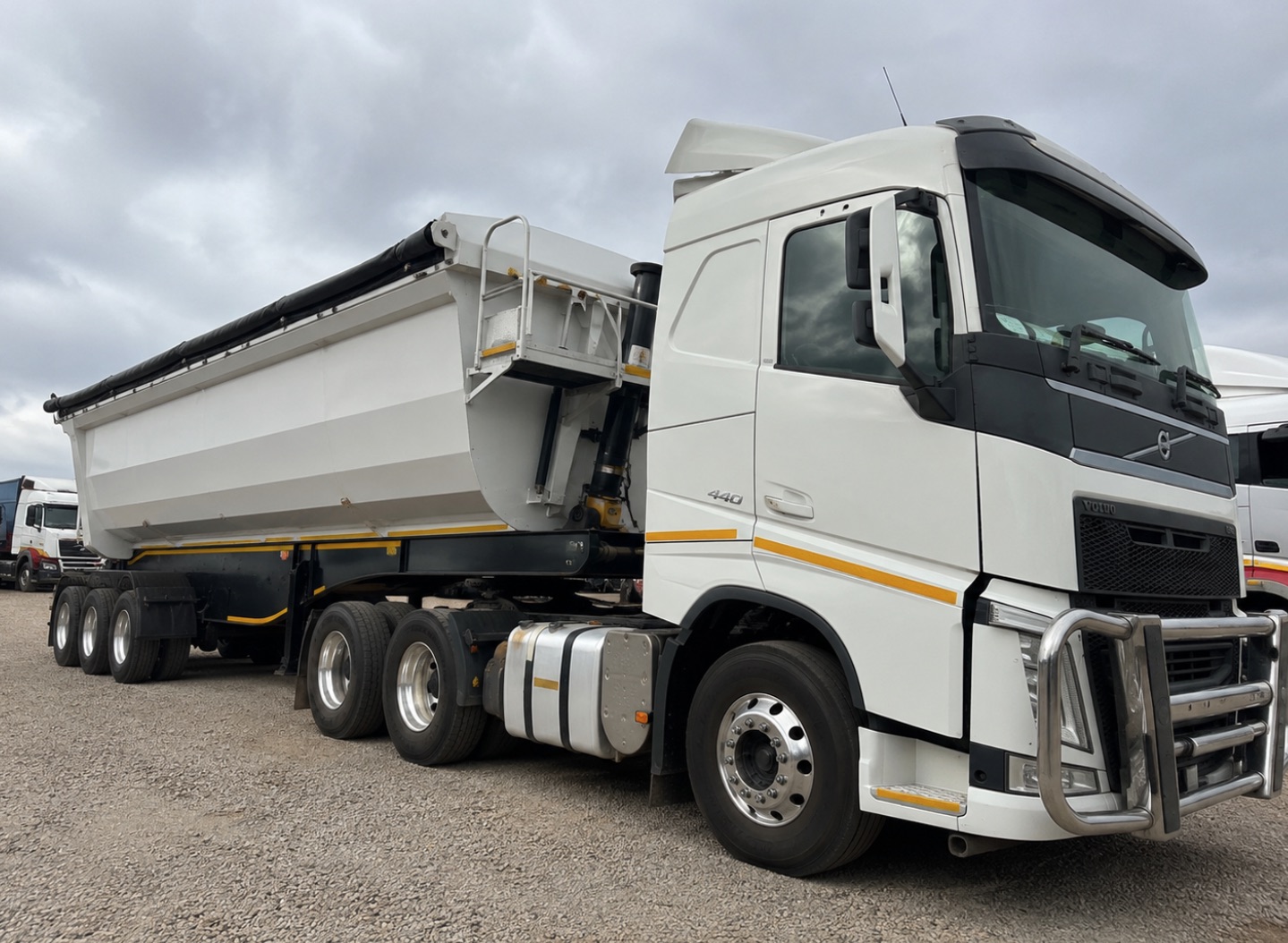
A dedicated vehicle for your cargo, direct from collection to delivery. Fastest option and the easiest to plan around.
Cross-border road freight
Zeen Freight moves full and part loads from Gauteng and the South African ports into Zimbabwe, Zambia, Botswana, Mozambique, Namibia and Lesotho — with the customs documentation, transit bonds and border coordination handled before the truck leaves.
Cross-border trucking is not really a transport problem, it is a documentation problem with a truck attached. The driving time is predictable; the border is not. Our job is to make sure nothing in the file gives the border a reason to hold your cargo.
A dedicated vehicle for your cargo, direct from collection to delivery. Fastest option and the easiest to plan around.
Shared trailer space for smaller consignments, cheaper per pallet with a slightly longer and less rigid timeline.
Correct transit paperwork for cargo passing through a third country, so duty is not raised in the wrong place.
Permits, route surveys and escorts for out-of-gauge cargo, arranged with the longer lead times these moves need.
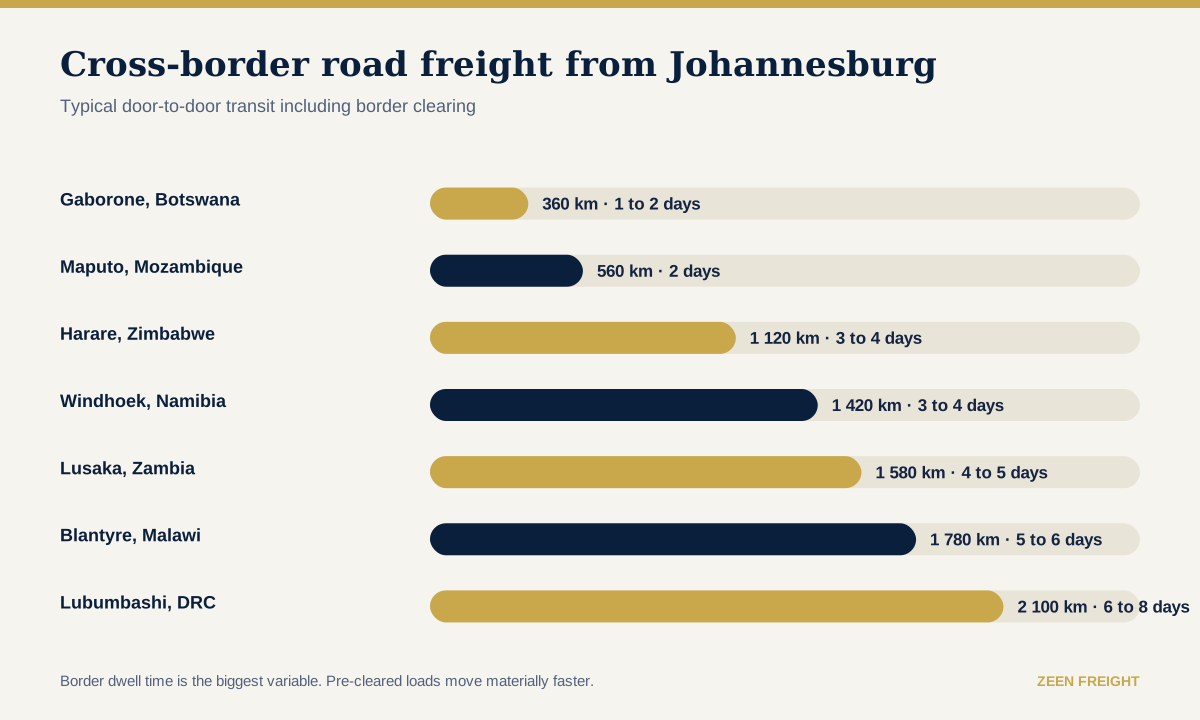
| Destination | Border post | Indicative transit |
|---|---|---|
| Gaborone, Botswana | Skilpadshek / Kopfontein | 1–2 days |
| Maputo, Mozambique | Lebombo | 1–2 days |
| Harare, Zimbabwe | Beitbridge | 2–4 days |
| Bulawayo, Zimbabwe | Beitbridge | 2–3 days |
| Lusaka, Zambia | Beitbridge then Chirundu | 3–5 days |
| Windhoek, Namibia | Vioolsdrif | 2–4 days |
| Maseru, Lesotho | Maseru Bridge | 1 day |
Transit is measured from collection to delivery and assumes documentation is complete. Border congestion, public holidays and vehicle inspections are the usual causes of variation.
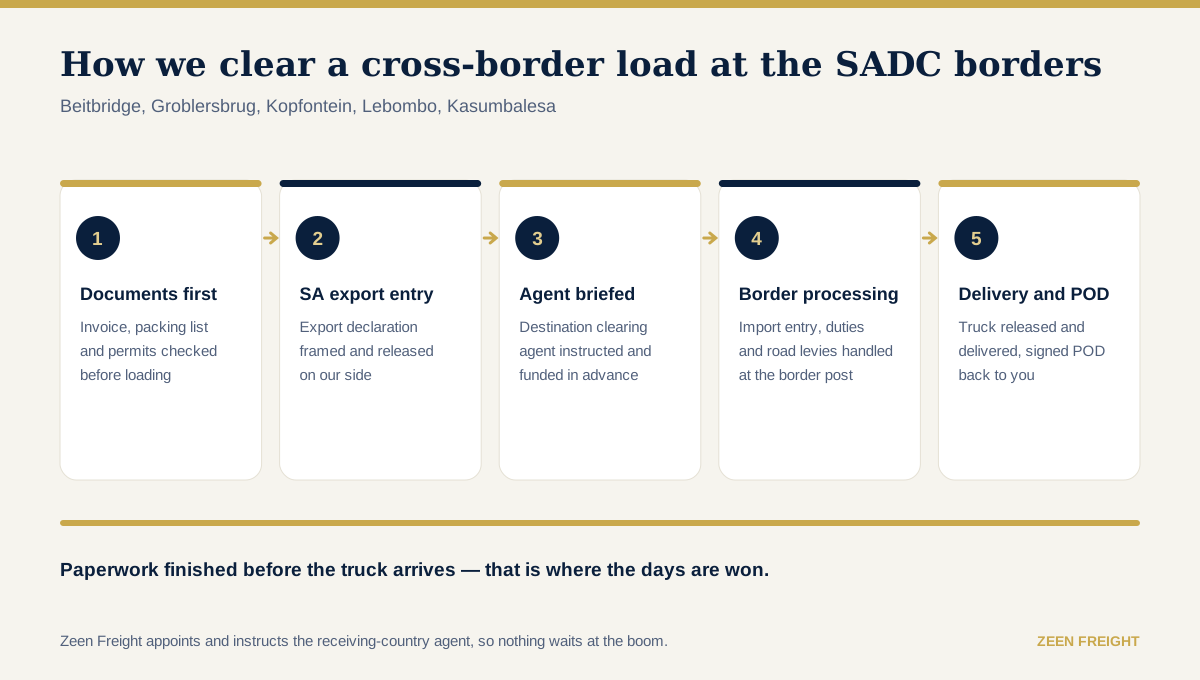
Commercial invoice, packing list, road manifest and the SAD500 export declaration, all matching each other exactly.
Where the goods qualify under SADC rules of origin, this can reduce or remove destination duty. Worth checking before every shipment, not just the first.
Cargo crossing a country on the way to another needs transit documentation so duty is only raised at the final destination.
Import permits, standards approvals and pre-shipment inspections vary by country and commodity. We confirm requirements before dispatch.
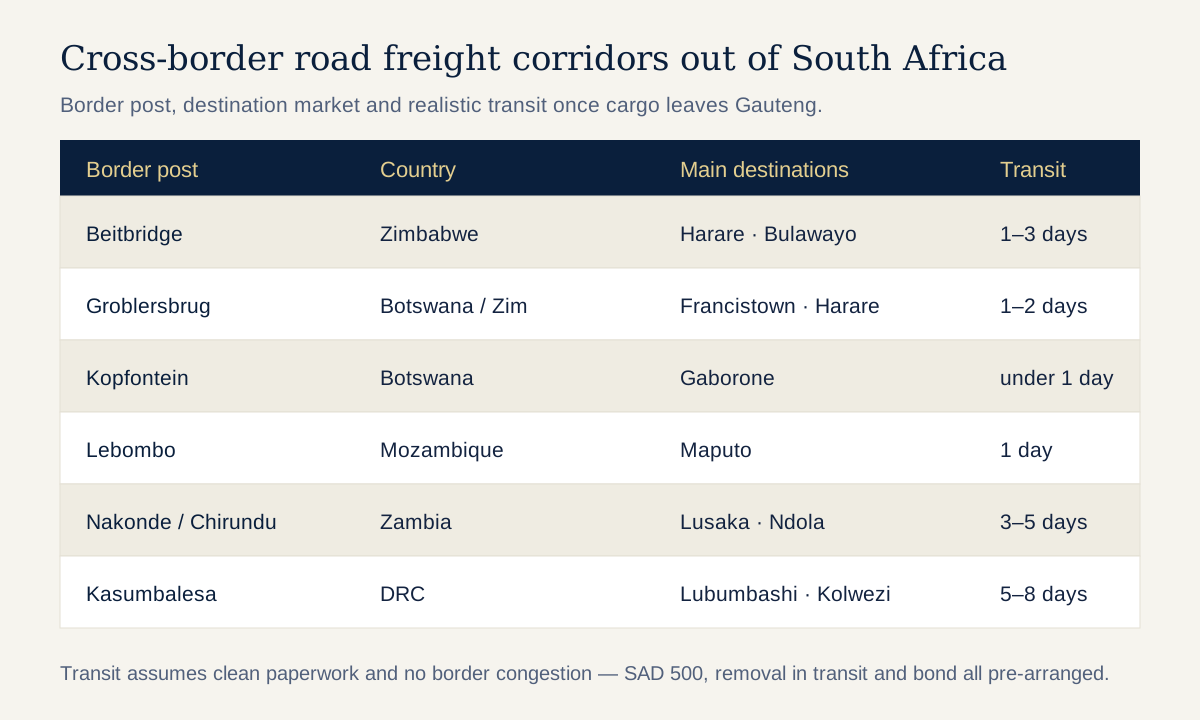
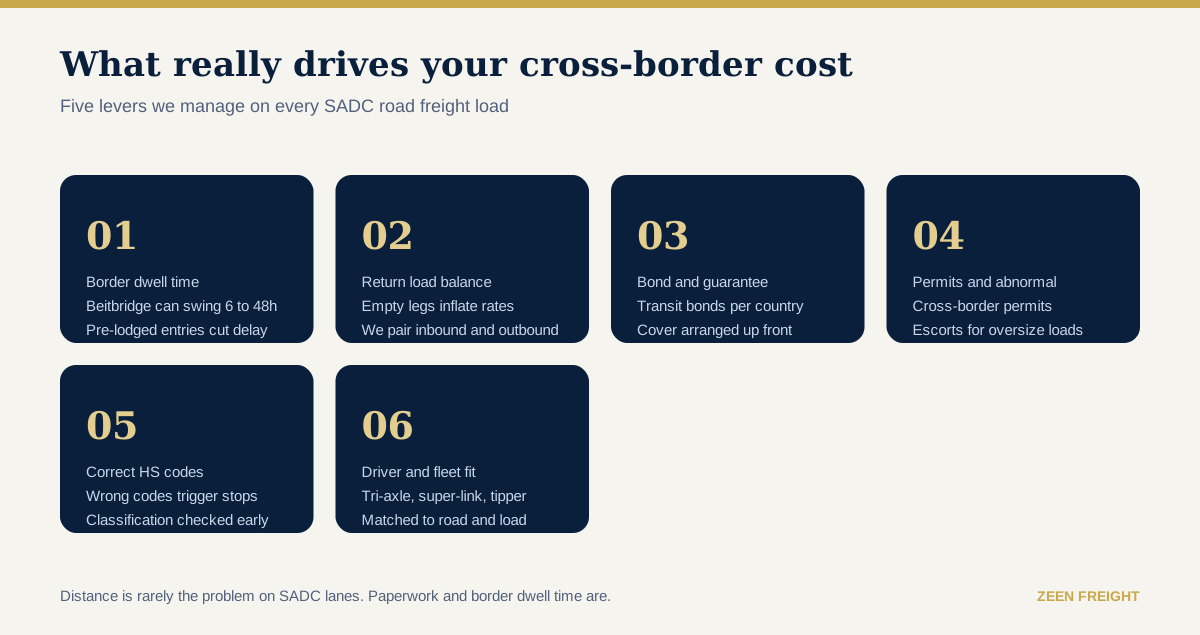
On a cross-border load the driving is the predictable part. The border is where the days are won or lost.
Beitbridge into Zimbabwe is the busiest crossing in the region and the one most sensitive to paperwork — a truck can reach it in a day from Gauteng and then stand for another because a single document was not pre-lodged. Groblersbrug offers a quieter alternative into Botswana and onward to Zimbabwe and Zambia. Kopfontein serves Gaborone and is usually the quickest crossing of all. Lebombo runs into Maputo, which for Mozambican cargo often beats routing through a South African port at all. Chirundu and Nakonde reach Lusaka and the Zambian Copperbelt, and Kasumbalesa carries the DRC mining traffic into Lubumbashi and Kolwezi.
What keeps these moving is documentation prepared before departure, not at the boom. We lodge the South African export or removal in transit, arrange the bond, and have the destination-country entry ready so the file is waiting at the post. On the Copperbelt run in particular, where transit can stretch to eight days, bond and transit management is the whole job.
Cargo passing through South Africa should never pay South African duty, and getting that structure right is where most cross-border money is saved.
Goods landing at Durban for Zimbabwe, Zambia, Botswana, Mozambique or the DRC move under a removal in transit against a bond. The duty is suspended, the cargo stays under customs control, and the bond is acquitted when the goods exit at the border post. Where an acquittal is not properly closed out, the liability sits against the bond and becomes an expensive problem months later, so we track every transit to acquittal rather than assuming it closed.
Mining and project cargo into Zambia and the DRC brings its own requirements: abnormal load permits and route surveys for out-of-gauge plant, escorts where provincial authorities require them, and coordination between the ocean leg, the port clearance and a trucking window that can be weeks out. We run these as single projects rather than handing you between a forwarder, a clearing agent and a transporter. Our road freight service page covers the equipment side, and bonded warehousing is often the right holding point between arrival and the border slot.
Distance is predictable. Borders are not. On a Johannesburg to Lusaka run, the driving is the easy part — the variable is how long the truck stands at Beitbridge and Chirundu.
We work the main SADC gateways daily: Beitbridge into Zimbabwe, Groblersbrug into Botswana and onward to Zambia, Kopfontein and Skilpadshek for Botswana, Lebombo into Mozambique, Vioolsdrif into Namibia, Chirundu between Zimbabwe and Zambia, and Kasumbalesa into the DRC Copperbelt. Each one has its own operating hours, its own systems and its own queue behaviour, and the practical difference between a good agent and a bad one is measured in days at these posts.
What causes delay is almost never the cargo. It is an invoice value that does not match the declaration, a missing certificate of origin that would have qualified the goods for a preferential SADC rate, an unregistered consignee in the destination country, road access fees and carbon tax not prepaid, insurance certificates that have expired, or a destination clearing agent who was appointed but never funded. Every one of those is preventable with a phone call before loading.
So that is how we run it. Documents are checked before the truck is loaded. The South African export entry is framed and released on our side. The receiving-country agent is appointed, briefed and funded in advance. Border fees, permits and levies are arranged rather than improvised at the boom. And you get updates at the border rather than after it.
The document set changes slightly by destination, but the core list is consistent: a commercial invoice with correct values and currency, a detailed packing list, the South African export declaration, a certificate of origin where a SADC preferential rate applies, transport documents and consignment note, cargo insurance, the destination-country import permit where the goods are regulated, and the consignee’s tax and importer registration details in the receiving country.
Where goods are simply passing through South Africa or through a third country, they move under a removal in transit bond rather than being entered for home use. That bond has to be acquitted properly at the exit border, and an unacquitted RIT is a problem that surfaces months later as a liability. We track acquittals rather than assuming them.
For mining and construction clients supplying the Copperbelt, we also handle abnormal and out-of-gauge loads, permits and escorts, and staged deliveries where a site can only receive so much at a time. If the cargo arrived by sea first, we handle the port clearing in Durban and the road leg on the same file.
Related: road freight services, customs clearance, bonded warehousing for re-export and port clearing in Durban.
As a guide, Johannesburg to Gaborone is about 1 to 2 days, Johannesburg to Harare 2 to 4 days via Beitbridge, Johannesburg to Lusaka 3 to 5 days via Beitbridge and Chirundu, Johannesburg to Maputo 1 to 2 days via Lebombo, and Johannesburg to Windhoek 2 to 4 days. Border processing is the single biggest variable, and Beitbridge in particular can add a day or more during peak periods.
Beitbridge for Zimbabwe and onward to Zambia, Chirundu and Kazungula for Zambia, Skilpadshek and Kopfontein for Botswana, Lebombo for Mozambique, Vioolsdrif for Namibia, and Maseru Bridge for Lesotho. Which one we use depends on the destination, the commodity and current congestion.
A commercial invoice, a packing list, a road manifest and a SAD500 export declaration. Cargo moving in transit through a country needs the correct transit or bond documentation so duty is not raised in the wrong place. A SADC certificate of origin can reduce or remove duty on qualifying goods, and some commodities need import permits in the destination country.
Often, yes. Goods that meet the SADC rules of origin can enter member states at preferential or zero duty rates. The saving is frequently larger than the transport cost, but the certificate has to be correct and issued before the goods move. We check whether your commodity qualifies as part of the quote.
Both. A full truckload is dedicated to your cargo and is the fastest option because there are no other stops. A part load shares the trailer, which is cheaper per pallet but adds time for consolidation and for other deliveries on the route.
Documentation, almost always. A mismatch between the invoice, the manifest and the customs declaration will stop a truck at the border, and fixing it from the queue is slow. Missing transit bonds, an unregistered consignee and incorrect tariff classification are the next most common causes. We check the file before the truck leaves rather than after it arrives at the post.
Yes. Abnormal loads need permits, route surveys and sometimes escorts, and the lead time is longer than standard freight. Send dimensions, weights and the centre of gravity as early as possible so the permitting can start.
Send us the origin, destination, commodity and rough weight or volume and we will come back with a landed cost, not just a freight rate.