Tariff classification
Determining the correct heading for your goods, which sets the duty rate, the VAT base and whether a permit is required at all.
SARS-licensed customs brokerage
Zeen Freight is a SARS-licensed customs clearing agent handling import and export entries at every South African port of entry — tariff classification, valuation, duty and VAT calculation, permits, and release.
Customs clearance is where most freight problems surface, and almost none of them originate there. By the time SARS raises a query, the mistake was usually made weeks earlier in an invoice, a classification or a missing permit. Our value is in catching it before the cargo lands.
Determining the correct heading for your goods, which sets the duty rate, the VAT base and whether a permit is required at all.
Establishing the customs value on a basis SARS will accept, and being able to substantiate it if asked.
Lodging the SAD500 bill of entry, pre-lodging ahead of arrival, settling duty and VAT and obtaining release from the terminal.
ITAC import permits, NRCS letters of authority, DAFF and SAHPRA approvals, and certificates of origin where they apply.
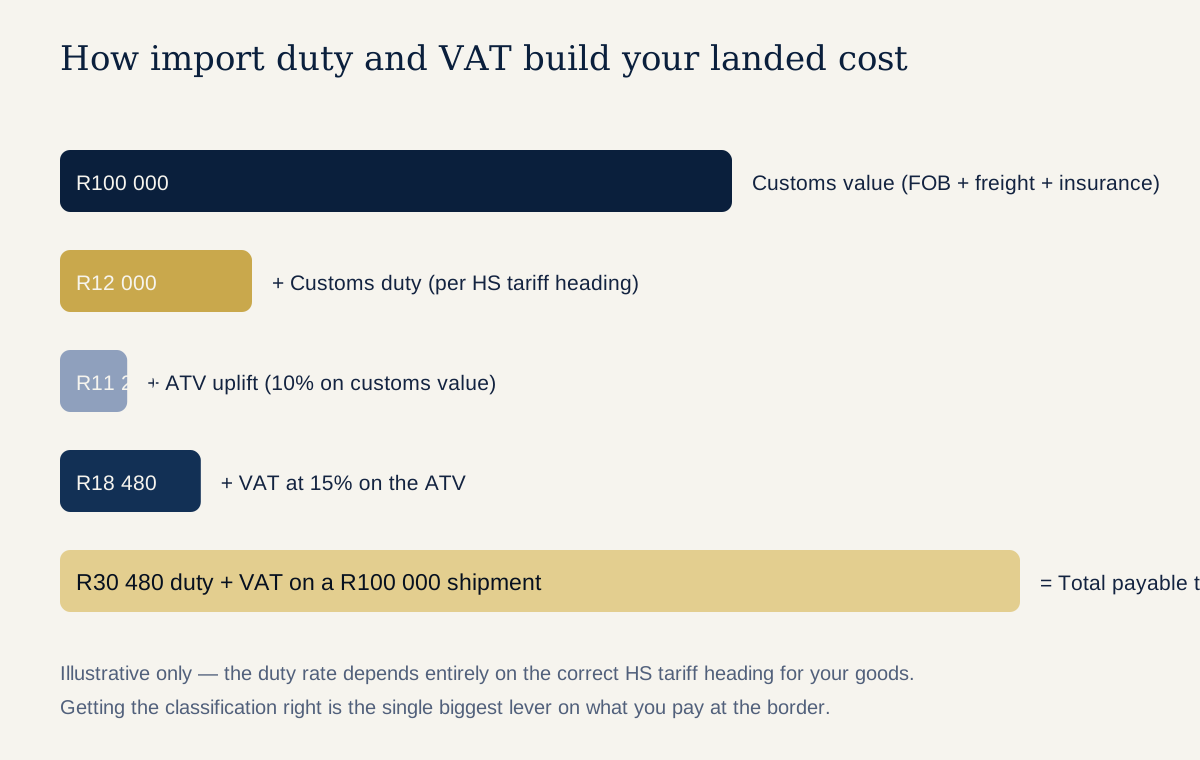
This is the calculation that catches out most first-time importers, so here it is in full.
| Mode | Locations |
|---|---|
| Sea | Durban, Cape Town, Gqeberha, Ngqura, Richards Bay |
| Air | OR Tambo (JNB), Cape Town International (CPT), King Shaka (DUR) |
| Land borders | Beitbridge, Lebombo, Skilpadshek, Kopfontein, Vioolsdrif, Maseru Bridge, Chirundu and Kazungula routings |
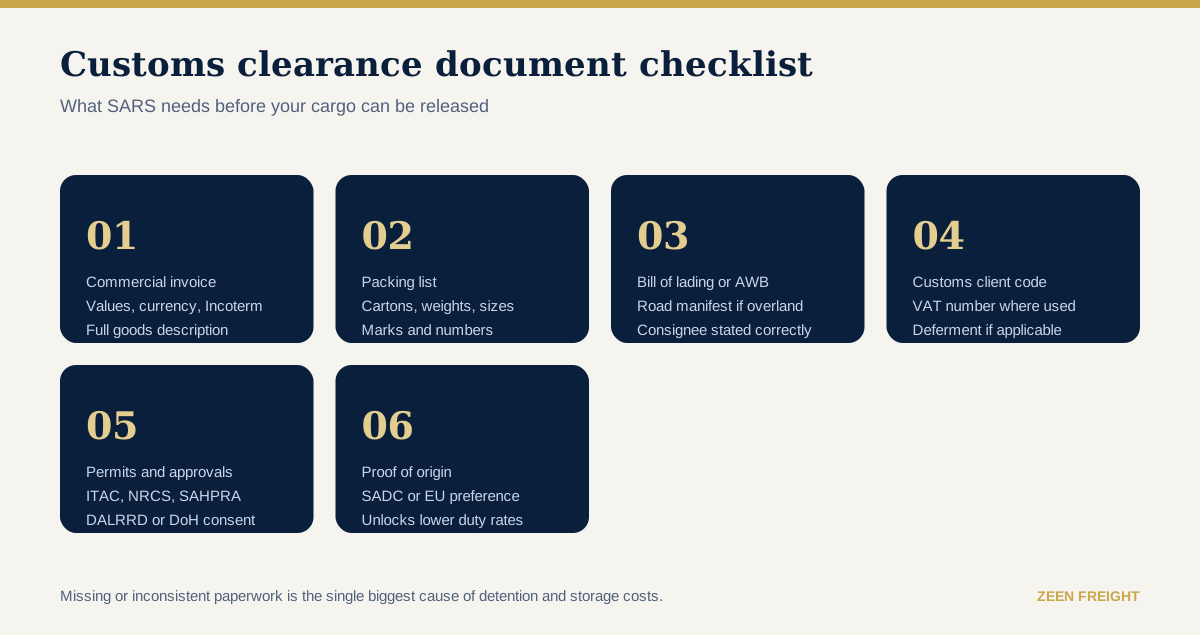
Commercial invoice, packing list, bill of lading or air waybill, and your customs client code. The invoice must show the incoterm, the currency and a description that matches the goods.
Certificate of origin, EUR1 for preferential European origin, or a SADC certificate for regional trade where the goods qualify.
ITAC permits, NRCS letters of authority for electrical and regulated goods, DAFF permits for agricultural products, SAHPRA where applicable.
Purchase orders, payment proof and technical specifications — the material that substantiates value and classification if SARS asks.
Your duty rate is not set by what you call the goods. It is set by the tariff heading the goods fall under in Schedule 1 of the Customs and Excise Act, and a single digit changes everything.
Two products that look identical on an invoice can attract 0% and 20% duty respectively depending on composition, function and how they are presented for retail sale. We classify against the actual product — material breakdown, intended use, packaging — rather than the supplier's description, because a Chinese factory writing "plastic parts" on a commercial invoice has no obligation to know the South African tariff book.
Getting this right protects you twice. It stops you overpaying duty you never owed, and it protects you from the far more expensive outcome: a post-clearance audit where SARS re-determines the heading, raises the duty retrospectively, and adds penalties and interest on every entry going back years. Where a classification is genuinely arguable we will say so, and where the value is high enough we will recommend applying for a binding tariff determination so the position is settled in writing before you commit to volume.

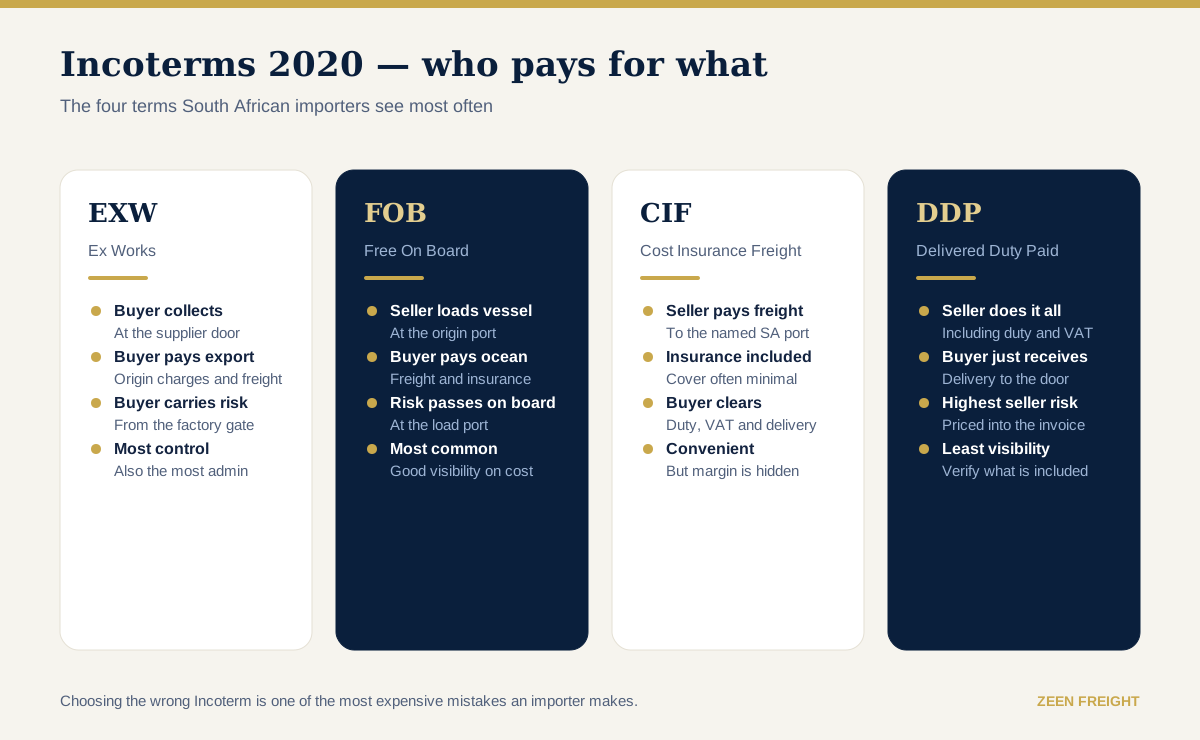
The clearance itself is fast when the paperwork is right. What causes delay is almost never SARS being slow; it is a missing certificate of origin, a commercial invoice that does not match the packing list, an incoterm that nobody agreed in writing, or a permit that should have been applied for six weeks earlier. We check the document set on receipt and tell you what is missing while the cargo is still on the water, which is the only point at which fixing it is free.
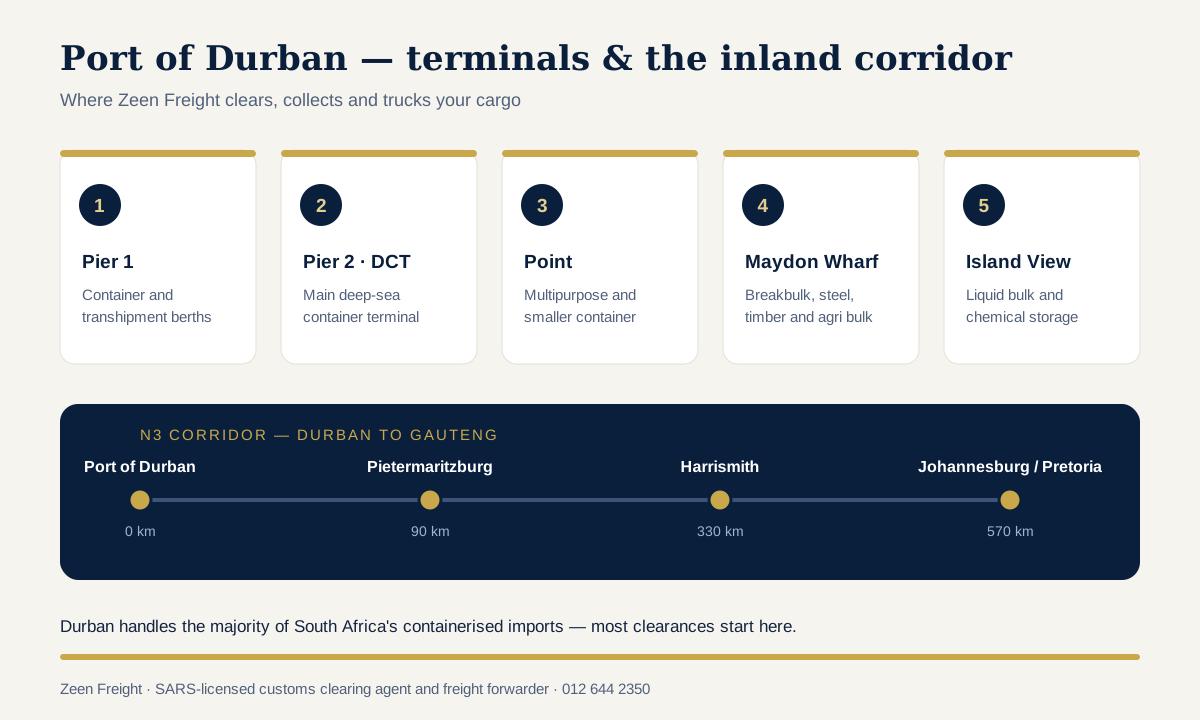
We lodge entries at every major South African port of entry. In practice most of our volume clears at Durban, where the Durban Container Terminal and Maydon Wharf handle the bulk of Gauteng-bound imports, and at OR Tambo for air freight. We also clear at Cape Town Container Terminal, Gqeberha and Ngqura for Eastern Cape automotive cargo, Richards Bay for bulk and project loads, and at the land borders — Beitbridge into Zimbabwe, Lebombo into Mozambique, Groblersbrug and Kopfontein into Botswana.
A local presence at the port matters because the expensive part of a clearance is not the entry, it is the standing time. Storage at a container terminal and demurrage to the shipping line both run daily, and a container held for a documentary query on Friday afternoon costs you the whole weekend. We lodge before arrival wherever the documents permit, and we deal with stops and detentions directly with the branch office handling the entry rather than by email queue.
Importing regularly through KwaZulu-Natal? Our Durban customs clearing and freight forwarding page sets out the terminals, charges and realistic timelines.
Cash flow is usually the real constraint on an import programme, not duty rates.
If you clear regularly, a SARS deferment account lets you consolidate duty and VAT and settle on account rather than paying per entry before release, which can free up a meaningful amount of working capital across a month. We can clear on our own deferment for approved clients, or help you apply for your own once your volumes justify it.
Where goods are moving through South Africa rather than into it, a removal in transit under bond keeps them out of the duty net entirely — the correct route for cargo destined for Zimbabwe, Zambia, Botswana, Mozambique or the DRC that simply lands at Durban on the way. Getting the bond and the transit documentation right is what keeps a truck moving through Beitbridge instead of parked at it. Bonded warehousing is the third option when you want to land stock now and pay duty only as you draw it down.
Yes. Any business importing or exporting commercially needs a customs client code registered with SARS. Registration takes time, so it should be done before your first shipment is booked, not while a container sits at the terminal. We can guide you through what SARS requires.
VAT is not calculated on the invoice value. It is calculated on the added tax value, which is the customs value plus a 10% uplift for goods imported from outside the Southern African Customs Union, plus any customs duty payable. The 15% VAT rate is then applied to that figure. This is why landed-cost estimates based only on the supplier invoice are always too low.
When documents are complete and the entry is pre-lodged before arrival, release is often the same day or the next working day. Delays almost always come from the file, not from SARS: incomplete invoices, a valuation that cannot be substantiated, a missing permit, or a tariff heading that does not match the goods. We check the file while the cargo is still in transit for exactly this reason.
A stop means SARS wants to verify something before release, usually the classification, the value or the origin. A detention or inspection means the cargo will be physically examined. Both are managed by responding quickly with the right supporting evidence. Fighting it takes longer than answering it properly, so we assemble the substantiating documents rather than argue the point.
A tariff determination is a binding ruling from SARS on how a specific product should be classified. It is worth obtaining when a commodity sits between two headings with materially different duty rates, or when you import the same product repeatedly and want certainty. It removes the risk of a retrospective assessment years later.
SARS operates a deferment scheme that allows approved importers to settle duty and VAT on a monthly account rather than per shipment, which helps cash flow considerably. Approval requires security and a compliance history. We can explain how it works and what SARS will expect from your business.
All South African ports of entry. That includes Durban, Cape Town, Gqeberha, Ngqura and Richards Bay by sea, OR Tambo, Cape Town International and King Shaka by air, and the land borders including Beitbridge, Lebombo, Skilpadshek, Kopfontein and Vioolsdrif.
Sometimes. Preferential origin certificates such as EUR1 or a SADC certificate can reduce or remove duty on qualifying goods. Rebate and drawback provisions exist for goods used in manufacturing or re-exported. Correct classification alone often saves more than any of these. All of it depends on your specific commodity and supply chain, which is why we look at it before you ship rather than after.
Send us the origin, destination, commodity and rough weight or volume and we will come back with a landed cost, not just a freight rate.