Container stripping
Devanning imported containers on arrival so the empty can be returned inside the free days, with the cargo checked and tallied as it comes off.
Storage and distribution
Secure storage, container unpacking and distribution at key logistics hubs — arranged as part of your freight and clearance plan rather than bolted on afterwards.
Most importers think of warehousing as a cost. Used properly it is a saving — it is the cheapest way to get a container off the quay and the empty back to the line before detention starts eating your margin.
Devanning imported containers on arrival so the empty can be returned inside the free days, with the cargo checked and tallied as it comes off.
Space for cargo waiting on a delivery slot, an export sailing or the rest of a consolidated order.
Secure, climate-appropriate storage for inventory released gradually rather than all at once.
Order picking, repacking, labelling and re-palletising, then dispatch on national or cross-border transport.
| Duty-paid storage | Bonded storage | |
|---|---|---|
| When duty and VAT are paid | On import clearance, before storage | Deferred until the goods leave the warehouse |
| Best for | Stock you will sell or use locally, straightforward imports | Cargo that may be re-exported, or high-duty stock released gradually |
| Cash flow effect | Duty paid up front | Duty paid as stock moves |
| Administration | Standard | Customs-licensed facility with stricter record-keeping |
Most shipments do not need a bonded facility. Where it genuinely helps, we build it into the clearance plan rather than discovering the need after arrival.
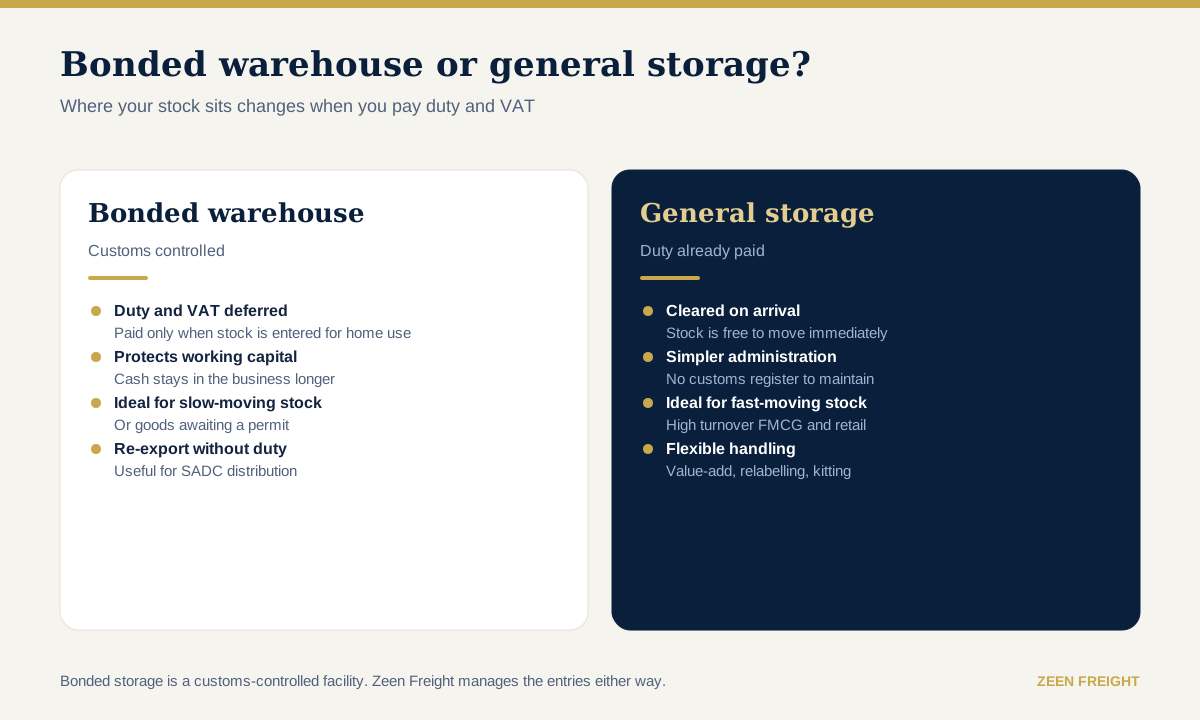
A bonded warehouse lets you land stock in South Africa without paying duty and VAT on arrival. The goods sit under customs control and duty becomes payable only as you draw them out for the local market — which for a large consignment can free up a very significant amount of working capital across a quarter.
It is the right structure when you import in full containers but sell in small quantities, when you are holding stock for a tender you have not yet won, or when goods may be re-exported to Zimbabwe, Zambia, Botswana or Mozambique and you would rather not pay South African duty on cargo that is only passing through.
We handle the customs paperwork on entry, the running stock account under bond, and the ex-bond entries as you release. Because the same team also does your customs clearance, the bond position and the entries stay consistent instead of sitting with two different service providers.

Most warehousing problems are actually container problems. Free time on a container runs from the day it lands, and every day it stands full is a day of demurrage.
We devan containers on arrival, check quantities against the packing list, photograph and record any damage while there is still a claim to make, and put the stock away on racking. From there you can run it as straightforward storage, or as a full third-party logistics operation with pick and pack, labelling, kitting, palletising for retail delivery, and dispatch on your instruction.
Cross-docking is the alternative when the stock is already committed. Instead of putting goods away and picking them again, we break the container straight into outbound loads and send it on the same day. For importers supplying national retail chains that removes a handling step, a storage charge and about two days from the cycle.
Warehousing goes wrong in the handover points, not in the racking. So we run one flow, on one stock file, from the moment the container arrives to the moment your customer signs for the delivery.
Every inbound container is checked and photographed with the seal intact before it is opened, then devanned carton by carton with quantities verified against the packing list. Discrepancies are raised the same day, with photographic evidence, while a claim against the supplier or carrier is still realistic. Stock is put away by SKU with batch and expiry captured on receipt, so first-expired-first-out is enforced by the system rather than by memory.
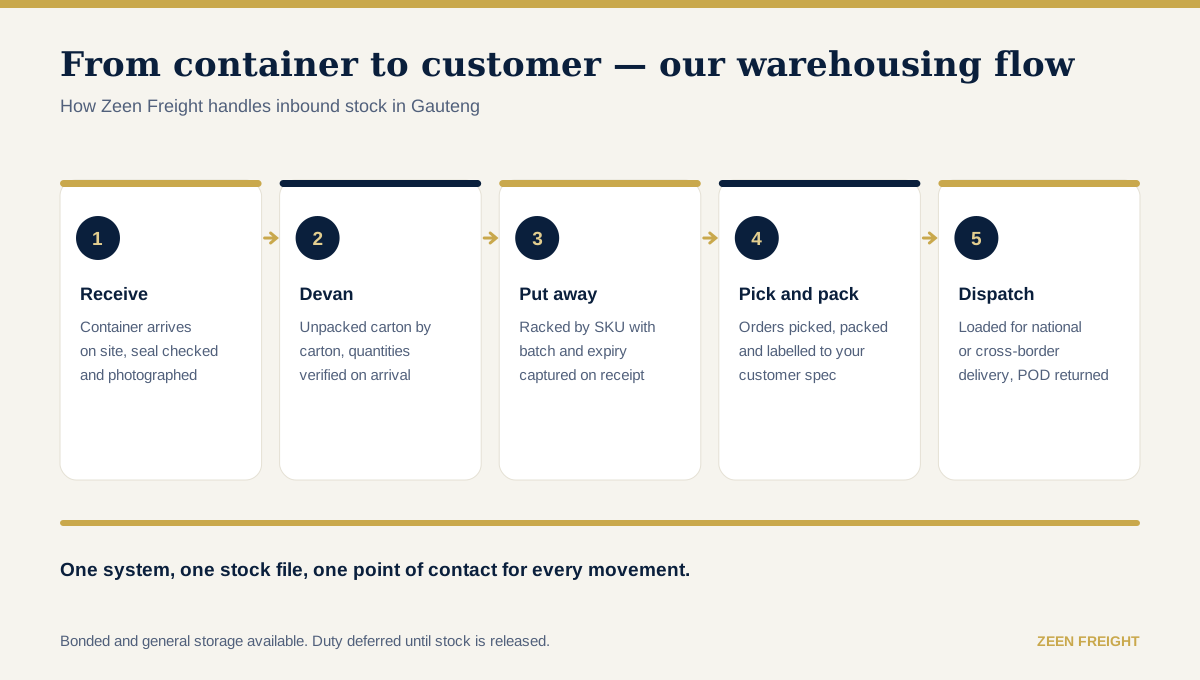
Container unpacking, or devanning, is the single most useful service we offer importers who do not want a 40ft container standing in their yard. We unpack at our facility, palletise and wrap, and then deliver in the quantities you can actually receive. That releases the container back to the shipping line quickly, which stops container detention charges dead.
Where stock does not need to be stored at all, we cross-dock: the container is unpacked and the cargo goes straight onto outbound vehicles the same day. For e-commerce and retail clients we run pick and pack to your packaging and labelling specification, including inserts, barcode labels and courier-ready cartons. We also handle relabelling, kitting, repacking, quality checks and returns processing.

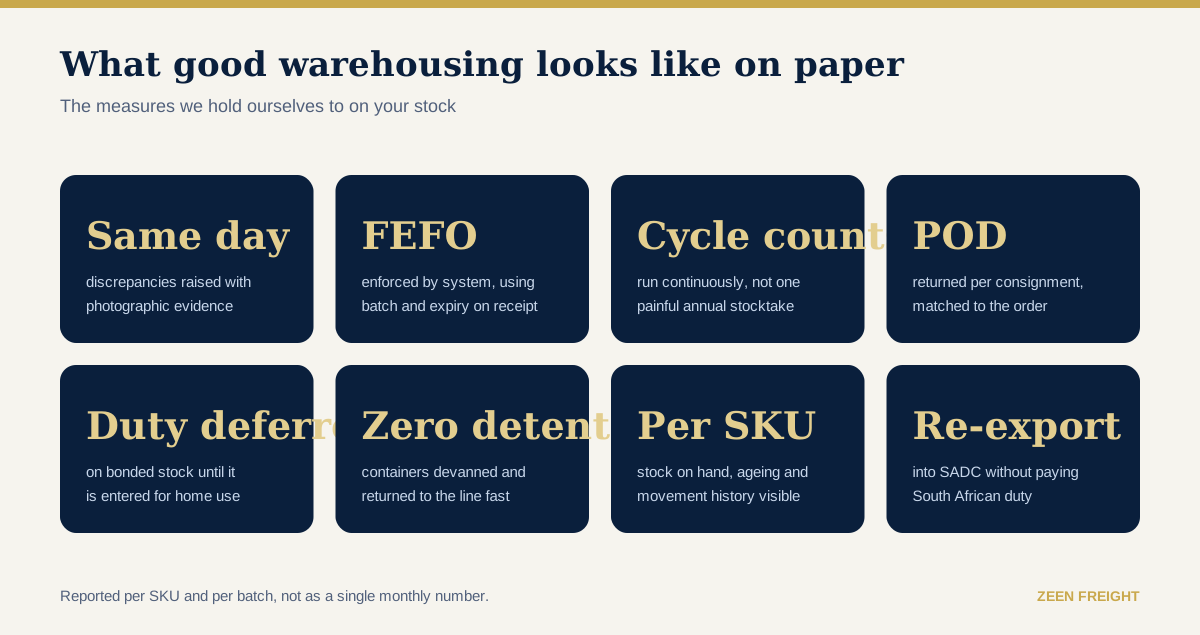
You should be able to answer three questions at any moment: what do I have, where is it, and what did it cost me landed. Our reporting covers stock on hand by SKU and batch, ageing, inbound and outbound movement history, and proof of delivery per consignment. Cycle counts run continuously rather than as one painful annual stocktake.
If cash flow is the constraint, bonded storage is the tool. Goods sit in a customs-controlled facility and duty and VAT only become payable when stock is entered for home use — so the money stays in your business until you are actually selling. It also lets you re-export into Zimbabwe, Zambia, Botswana, Mozambique or Namibia without paying South African duty on goods that were never destined for the local market. We manage the customs register and the entries, so the compliance burden does not land on your team.
Related: customs clearance and duty deferral, national road distribution and port clearing in Durban.
Gauteng is where most South African consumption happens, and it is also where most imported stock needs to end up. Storing it close to the market rather than close to the port is usually the cheaper answer.
Our base in Centurion sits between Pretoria and Johannesburg with quick access to the N1, N14 and R21, which puts OR Tambo International, the Johannesburg industrial belt, Midrand, Kempton Park, Rosslyn and the Tshwane manufacturing corridor within an easy run. For distributors that means shorter secondary delivery legs, lower last-mile cost and the ability to promise next-day delivery across the province without holding stock in three places.
It also simplifies air freight. Cargo landing at OR Tambo can be cleared and delivered into storage the same day, which matters for spares, pharmaceuticals and anything with a short shelf life. And because the same team handles your sea freight through Durban, the road leg up the N3 and the storage at the other end, there is no gap between service providers where cargo and information get lost.
If your business is seasonal, storage should be too. We would rather scale space up and down with your cycle than have you sign for a warehouse you only fill for four months of the year. Tell us what your peak actually looks like and we will build the space plan around it.
Related: national road distribution, air freight into OR Tambo and sea freight clearing in Durban.
Shipping lines allow a limited number of free days before detention charges start running on the container. If you cannot take full delivery immediately, stripping the container into a warehouse and returning the empty stops that clock. The storage cost is almost always lower than the detention you avoid, and it also frees you to distribute the cargo on your own schedule.
A bonded warehouse is a customs-licensed facility where imported goods can be stored before duty and VAT are paid. It is useful if you want to defer the duty payment, if you are holding stock that may be re-exported, or if you are releasing inventory gradually. It is not necessary for most straightforward imports. Where a bonded facility is the right answer for your cargo we arrange it as part of the clearance plan.
Usually a handling charge for receiving and dispatching the cargo, plus storage per pallet or per square metre per period. Container stripping is normally quoted per container. Value-added work such as pick and pack, labelling or re-palletising is quoted separately. We give you the full structure so you can compare it against the alternative of taking delivery immediately.
Yes. Once cargo is in the warehouse it can be released against your instructions and dispatched on full or part loads nationally, or on cross-border trucks into the SADC region. Because the same team holds the customs file, the stock and the transport, there is no handover to lose paperwork in.
Yes, including order picking, repacking, re-palletising, labelling and basic kitting. This is often needed when goods arrive in export cartons but have to reach retail or end customers in different quantities.
Tell us at the quoting stage rather than on arrival. If we know a container is coming and will need to be stripped, we can plan the labour and the space against the vessel schedule. Space arranged after the container has already landed is more expensive and less certain.
Send us the origin, destination, commodity and rough weight or volume and we will come back with a landed cost, not just a freight rate.